

U.S. lawyers face concrete, enforceable ethical obligations when it comes to protecting client data and responding to cybersecurity incidents. The controlling authorities are clear: Model Rule 1.6(c) requires "reasonable efforts" to prevent unauthorized access to client information; Rule 1.1 demands technological competence; Rule 1.4 triggers prompt client notification when a breach is a material development; Rules 5.1 and 5.3 impose supervisory responsibility over vendors and nonlawyer staff; and Rule 1.15 governs safekeeping of client property and funds. ABA Formal Opinion 483 and NYC Bar Formal Opinion 2024-3 are the two most important formal opinions in practice today.
Here is the short checklist every firm should confirm before an incident occurs:
- Documented risk-based security program — written policies, risk assessments, and control decisions on file
- Reasonable technical safeguards — encryption in transit and at rest, multi-factor authentication (MFA), immutable backups, and endpoint protection
- Vendor oversight — due diligence, contractual security requirements, and periodic validation of third-party controls (Rules 5.1/5.3)
- Incident response plan — a written, tested playbook that includes privilege preservation and client notification procedures
- Prompt client notification — when a breach is a material development under Rule 1.4, current clients must be notified without unreasonable delay
- Ongoing technological competence — annual training, tabletop exercises, and documented continuing education (Rule 1.1, Comment [8])
"Reasonable efforts" is the standard, not absolute security. A firm that cannot produce documentation of its program, training logs, and vendor oversight records will struggle to defend itself before a disciplinary committee, regardless of how good its technology actually is.
Table of Contents
- Which Model Rules apply to cybersecurity? A rule-by-rule breakdown
- What do "reasonable efforts" actually require from your firm?
- Step-by-step playbook: what to do in the first hours after an incident
- When and how do you notify clients after a breach?
- How do Rules 5.1 and 5.3 apply to your vendors and outside providers?
- Ransom payments, cyber insurance, and law enforcement: what are the ethical factors?
- Documentation and record retention: what you must keep and why
- How do you meet the duty of technological competence under Rule 1.1?
- Client-notification templates and an incident-response checklist you can use now
- What should you look for in a vCISO service to meet these obligations?
- Key Takeaways
- Cybersecurity is an ethics issue, not just an IT project
- CisoSafe helps law firms meet these ethical obligations directly
- Authoritative sources and recommended further reading
Which Model Rules apply to cybersecurity? A rule-by-rule breakdown
Every cybersecurity lawyer responsibility traces back to a specific rule. Understanding the mapping lets you cite authority, assign ownership, and build controls that satisfy each obligation directly.
Rule 1.6(c): Confidentiality and reasonable efforts
Rule 1.6(c) is the foundation. It requires lawyers to make reasonable efforts to prevent the inadvertent or unauthorized disclosure of, or unauthorized access to, client information. Comment [18] clarifies that the standard is risk-based: factors include the sensitivity of the information, the likelihood of disclosure absent safeguards, the cost of additional protections, and the difficulty of implementing them.
Concrete examples under Rule 1.6(c):
- Encrypt client communications and file transfers using tools such as ProtonMail, Virtru, or a firm-managed encrypted portal
- Require MFA on all systems that store or process client data
- Restrict access to matter files on a least-privilege basis
- Maintain immutable, air-gapped backups tested at least quarterly
Rule 1.1: Competence and technological literacy
Rule 1.1 requires competence, and Comment [8] explicitly extends that duty to understanding the benefits and risks of relevant technology. ABA guidance frames safeguarding client data as part of competent representation, not a separate IT function.
Concrete examples under Rule 1.1:
- Lawyers must understand the firm's tech stack well enough to recognize when a vendor or tool creates unacceptable risk
- Completing annual cybersecurity training is a competence obligation, not optional professional development
- Staying current on emerging threats — ransomware, phishing, credential theft — is part of the duty
Rule 1.4: Communication and client notification
Rule 1.4 requires lawyers to keep clients reasonably informed and to promptly comply with reasonable requests for information. NYC Bar Formal Opinion 2024-3 concludes that a cybersecurity incident constitutes a "material development" triggering Rule 1.4 when it affects the lawyer's ability to represent the client or compromises confidential client information.
Concrete examples under Rule 1.4:
- Notify current clients when their data was likely accessed or exfiltrated
- Notify clients when a ransomware attack has materially impaired the firm's ability to access files needed for an active matter
- Provide clients with a clear description of what happened, what data was affected, and what protective steps the firm has taken
Rules 5.1 and 5.3: Supervision of lawyers and nonlawyer assistance
Rules 5.1 and 5.3 make partners and supervising lawyers responsible for the conduct of those they supervise, including outsourced vendors. Outsourcing without active oversight commonly leaves firms exposed; the duty requires verifying vendor controls, not simply contracting for services.
Concrete examples under Rules 5.1/5.3:
- Conduct security posture reviews of cloud storage, e-discovery, and practice management vendors before engagement
- Include data security, breach notification, and right-to-audit clauses in vendor contracts
- Require annual evidence of vendor security controls (SOC 2 Type II reports, penetration test summaries)
Rule 1.15: Safekeeping client property
Rule 1.15 requires lawyers to safeguard client property, including electronic files and funds held in trust. Cybersecurity controls that protect IOLTA accounts and client document repositories are a direct Rule 1.15 obligation.
What do "reasonable efforts" actually require from your firm?
The phrase "reasonable efforts" in Rule 1.6(c) is not vague once you understand how bar committees apply it. Michigan Bar guidance and state opinions consistently describe a risk-based program with documented controls, not a checklist of specific products. Here is what that program looks like in practice.
Technical controls
- Encryption: All client data in transit (TLS 1.2 or higher) and at rest (AES-256 or equivalent); encrypted email for sensitive communications
- MFA: Required on email, VPN, practice management systems, and cloud storage — no exceptions for partners
- Least privilege and role-based access: Attorneys access only the matters they work on; administrative access is tightly controlled and logged
- Immutable backups: Daily incremental, weekly full, stored off-network or in an air-gapped environment; tested for recovery under realistic attack scenarios at least quarterly
- Endpoint protection: EDR (endpoint detection and response) tools on all firm devices, including attorney laptops and mobile devices
- Secure remote access: VPN or zero-trust network access (ZTNA) for all remote connections; no direct RDP exposure to the internet
Policy and process controls
- Written incident response plan, reviewed and updated annually
- Data classification policy identifying which client data is most sensitive
- Retention and disposal policy with documented destruction procedures for client files at end of retention period
- Secure communication guidance for attorneys, specifying when to use encrypted platforms versus standard email
- Data minimization practices: collect and retain only what is necessary for the representation
Operational controls
- Annual formal risk assessment, documented and signed off by firm leadership
- Periodic vulnerability scanning and annual penetration testing (see law firm cyber threat types for prioritization guidance)
- Security awareness training for all staff, including phishing simulations
- Annual tabletop incident response exercise with post-mortem tracking
Pro Tip: Document every risk trade-off decision in writing. When a control is too costly or operationally impractical, record why and what compensating control you implemented instead. That documented reasoning is often the difference between a defensible "reasonable efforts" showing and a disciplinary finding.

Step-by-step playbook: what to do in the first hours after an incident
A cybersecurity incident triggers overlapping, sometimes conflicting duties. Pre-planned response steps reduce ad-hoc mistakes when the pressure is highest. This sequence applies to any incident that may have compromised client data or impaired firm operations.
-
Isolate affected systems immediately. Disconnect compromised devices from the network without powering them off (to preserve volatile memory evidence). Notify the IT lead and managing partner within the first hour.
-
Preserve evidence before remediation. Do not wipe or reimage systems until forensic imaging is complete. Preserve logs, email headers, and any indicators of compromise.
-
Engage forensic counsel under privilege. Retain incident response counsel and engage forensic investigators through that counsel. Funneling the investigation through privileged counsel protects forensic reports as work product and limits discoverability in subsequent litigation.
-
Establish an out-of-band communication channel. Assume firm email may be compromised. Use personal mobile devices or a separate communication platform for incident team coordination.
-
Determine scope: which client data was affected? Work with forensics to identify which matters, clients, and data types were accessible to the attacker. Map affected data to active client representations.
-
Assess materiality for each affected matter. For each client whose data may have been accessed or whose representation may be impaired, assess whether the incident rises to a "material development" under Rule 1.4. This assessment should be documented.
-
Notify clients where materiality is established. Once forensics provides sufficient scope information, send client notices without unreasonable delay. Coordinate timing with ethics counsel and, where applicable, with the cyber insurer.
-
Assess ransom or recovery options. If ransomware is involved, evaluate recovery from immutable backups before considering payment. Document the analysis and obtain client authorization where client data or funds are at stake.
-
Restore operations from clean backups. Rebuild from immutable backups only after forensics confirms the attack vector is closed. Do not restore from potentially infected backups.
-
Notify law enforcement if appropriate. Consider FBI and CISA reporting. Coordinate with counsel on what to disclose and how to protect client confidentiality during any cooperation.
-
Conduct a post-incident review. Within 30 days, document lessons learned, update the incident response plan, and remediate identified gaps.
Timeline summary:
| Phase | Priority tasks |
|---|---|
| First 24 hours | Isolate, preserve evidence, engage forensic counsel, establish out-of-band comms, notify managing partner |
| 24–72 hours | Scope determination, materiality assessment, insurer notification, initial client notices where required |
| First 30 days | Full forensic report, remediation, regulatory notifications, post-incident review, updated controls |
When and how do you notify clients after a breach?
The notification decision under Rule 1.4 turns on materiality, not just on whether data was confirmed exfiltrated. NYC Bar Formal Opinion 2024-3 makes clear that a material impairment to the firm's ability to represent a client can trigger the notification duty even when no substantive client data was confirmed stolen. A ransomware attack that locks the firm out of case files the day before a closing or trial is a textbook example.
What triggers notification:
- Confirmed or reasonably suspected exfiltration of client confidential information
- Loss of availability that materially impairs the firm's ability to perform services on an active matter
- Unauthorized access to systems containing client funds or trust account information
What a compliant client notice should include:
- A plain-language description of what happened and when the firm became aware
- The categories of client data that were or may have been affected
- Steps the firm has already taken to contain the incident and protect client data
- Steps the firm will take going forward (remediation, monitoring, controls)
- Protective steps the client should consider (credit monitoring, password changes, fraud alerts)
- A dedicated contact point at the firm for client questions
Privilege and timing considerations:
- Coordinate the timing and content of notices with forensic counsel to avoid disclosures that waive privilege
- Avoid including forensic findings or root-cause analysis in client notices; those details belong in privileged communications
- Note that statutory breach notification obligations under state law (and sector-specific laws such as HIPAA) may run concurrently and have their own timing requirements, which can be shorter than the ethical duty timeline
For matters involving regulated data (healthcare, financial services), also review legal data compliance requirements to confirm which statutory notification timelines apply alongside the ethical duty.
How do Rules 5.1 and 5.3 apply to your vendors and outside providers?
Vendor risk is where many firms have their largest unmanaged exposure. Supervision duties under Rules 5.1 and 5.3 require verifying vendor controls, not simply contracting for services. A vendor agreement that says "we take security seriously" is not supervision.
Pre-engagement due diligence checklist:
- Review the vendor's security posture: ask for a SOC 2 Type II report or equivalent third-party attestation
- Confirm the vendor conducts annual penetration testing and can provide a summary
- Assess data handling practices: where is client data stored, who has access, and how is it encrypted?
- Verify the vendor has a documented incident response plan and breach notification procedures
- Check subcontractor flow-down requirements: does the vendor impose equivalent security obligations on its own subcontractors?
Contract clauses to require:
- Data security obligations specifying minimum controls (encryption, access controls, MFA)
- Breach notification clause requiring vendor to notify the firm within 24–48 hours of a suspected incident
- Right-to-audit clause allowing the firm to request evidence of controls at least annually
- Indemnification for losses arising from vendor security failures
- Data return and destruction obligations at contract termination
Ongoing oversight:
- Annual review of vendor SOC 2 reports or equivalent attestations
- Periodic spot checks on access logs for vendor personnel with access to firm systems
- Document each oversight step and the evidence reviewed; map vendor controls to the firm's risk registry
Pro Tip: Require vendors to provide updated security attestations annually and after any significant change to their infrastructure. Map each vendor's stated controls to the corresponding risk in your firm's risk register. That mapping is direct evidence of supervisory diligence under Rules 5.1/5.3.
For a detailed vendor checklist and contract clause templates, the law firm vendor risk management checklist provides a practical starting point. Firms handling financial data can also reference how accounting firms approach client data protection for analogous controls applicable to sensitive financial records.
Ransom payments, cyber insurance, and law enforcement: what are the ethical factors?
No Model Rule categorically prohibits paying ransom, and none requires it. Bar opinions and practitioner guidance treat the decision as fact-specific, requiring documented analysis and, where client data or funds are at stake, client authorization.
Ethical framework for ransom decisions
Do:
- Assess recovery from immutable backups first; payment should be a last resort when recovery is not feasible
- Document the full analysis: threat actor assessment, data at risk, recovery options, legal constraints
- Obtain client authorization in writing before paying ransom when client data or client funds are involved
- Consult with ethics counsel and outside counsel experienced in ransomware before paying
- Check OFAC sanctions lists; paying a sanctioned threat actor creates independent legal liability under OFAC guidance
Don't:
- Pay ransom without documented client authorization when client interests are at stake
- Assume payment guarantees data deletion or decryption; threat actors frequently fail to deliver
- Make payment decisions unilaterally without involving ethics counsel and the cyber insurer
- Disclose payment details publicly without legal review
Cyber insurance considerations
- Notify the insurer as early as possible, typically within 24–48 hours of discovering the incident.
- Understand coverage triggers before the incident; some policies require insurer-approved forensic vendors.
- Review whether insurer-mandated actions (specific vendors, specific remediation steps) create any conflict with the firm's independent ethical duties to clients.
- Preserve all communications with the insurer under privilege where possible.
Law enforcement interaction
- Reporting to the FBI or CISA is generally voluntary for private firms, but cooperation can support recovery and may be required under some regulatory frameworks
- Before sharing any information with law enforcement, consult with counsel on what client confidential information may be implicated
- Obtain client consent before disclosing client-specific information to law enforcement where feasible
- Document the decision to report or not report, and the reasoning
Documentation and record retention: what you must keep and why
Documentation of the security program is frequently decisive in bar inquiries. Lack of documentation is often the fatal weakness, even when a firm's actual controls were reasonable. The records you keep before, during, and after an incident are your primary defense.
What to document:
- Pre-incident: Risk assessments, security policies, training logs, vendor due diligence records, penetration test reports, and control decision rationale
- During incident: Incident timeline (timestamped), decision log (who made what call and why), forensic engagement records, client communication drafts and approvals, insurer communications
- Post-incident: Forensic report (retained under privilege), remediation steps taken, updated risk assessment, post-incident review findings, regulatory notifications sent
Regulatory overlay:
State breach notification laws impose parallel obligations that run alongside ethical duties. Most U.S. states require notification to affected individuals and, in some cases, to state attorneys general when personal information is compromised. Sector-specific laws (HIPAA, GLBA, SEC Regulation S-P) impose their own notification timelines, which can be as short as 30 days. Identify all applicable statutory obligations at the outset of incident response, not after client notices go out.
Retention and evidence preservation:
- Retain forensic reports under privilege; do not produce them in response to discovery requests without a privilege review
- Preserve system logs for at least 12 months post-incident, or longer if litigation is reasonably anticipated
- Implement a litigation hold immediately when malpractice risk arises; document the hold and its scope
- Retain all incident-related communications, including internal Slack or Teams messages, under the same hold
Short documentation template:
| Document | Owner | Retention period |
|---|---|---|
| Annual risk assessment | IT lead / vCISO | 7 years |
| Security policy versions | Ethics counsel | Indefinitely |
| Training completion logs | HR / IT lead | 7 years |
| Vendor due diligence records | IT lead | Duration of relationship + 7 years |
| Incident timeline and decision log | Ethics counsel | Indefinitely |
| Forensic report | Outside counsel (privileged) | Indefinitely |
| Client notification records | Ethics counsel | Indefinitely |
| Regulatory notification records | Ethics counsel | Indefinitely |
How do you meet the duty of technological competence under Rule 1.1?
Rule 1.1 competence is not a one-time credential. It is an ongoing obligation to stay current with the technology the firm uses and the threats that target it. Comment [8] to Rule 1.1 makes this explicit: lawyers must keep abreast of changes in the law and its practice, including the benefits and risks of relevant technology.
Annual training program (all staff):
- Phishing awareness and simulation exercises (at least two simulated phishing campaigns per year)
- Password hygiene and MFA enrollment
- Incident reporting procedures: how to recognize and report a suspected breach
- Secure communication practices: when to use encrypted channels versus standard email
- Data handling and classification: what constitutes client confidential information and how to protect it
Quarterly targeted refreshers (role-specific):
- Partners and managing attorneys: threat landscape updates, ethics obligations review, tabletop exercise participation
- IT staff: vulnerability management, patch cadence, log review procedures
- Support staff: social engineering awareness, physical security, clean desk policy
Annual tabletop exercise:
- Simulate a realistic ransomware or data exfiltration scenario
- Walk through the incident response plan step by step with all key roles present (managing partner, ethics counsel, IT lead, outside counsel)
- Document gaps identified and assign remediation owners with deadlines
- Track post-mortem findings and confirm closure at the next exercise
Evidence of competence for bar purposes:
- CLE credits in cybersecurity and data privacy (document course titles and hours)
- Vendor-provided training completions (document provider, date, and content)
- External audit or assessment reports confirming controls are in place
- Tabletop exercise post-mortems showing the firm tested and updated its plan
Tested backups and recovery procedures are specifically called out in practitioner guidance as a competence obligation. An untested backup is not a compliance defense.
Client-notification templates and an incident-response checklist you can use now
These templates are designed to be adapted, not copied verbatim. Each aligns with Rule 1.4 and the guidance in NYC Bar Formal Opinion 2024-3. Coordinate with ethics counsel before sending any notice.
Low-severity notice (no confirmed data access, availability impact only)
Dear [Client Name],
We are writing to inform you that [Firm Name] recently experienced a technical security incident that temporarily affected access to certain firm systems. Our investigation, conducted with the assistance of outside forensic counsel, has not identified evidence that any client information was accessed or removed by an unauthorized party.
We have taken the following steps to address the incident: [brief description of containment and remediation steps]. We do not believe this incident has materially affected our ability to represent you, and your matter is proceeding as planned.
If you have questions, please contact [Name, Title, direct phone/email].
Medium-severity notice (possible data access, investigation ongoing)
Dear [Client Name],
We are writing to inform you of a cybersecurity incident at [Firm Name] that may have involved unauthorized access to systems containing client information. Our investigation is ongoing, and we are working with outside forensic counsel to determine the full scope of the incident.
Based on our investigation to date, we believe the following categories of information may have been affected: [describe data categories, e.g., matter correspondence, contact information]. We have no confirmed evidence at this time that your specific information was accessed, but we are notifying you out of an abundance of caution and in accordance with our professional obligations.
Steps we have taken: [containment, forensics, enhanced monitoring]. Steps we recommend you consider: [e.g., monitor for unusual communications, change passwords for any accounts shared with the firm].
We will provide an update as our investigation progresses. Please contact [Name, Title, direct phone/email] with any questions.
High-severity notice (confirmed exfiltration or material impairment)
Dear [Client Name],
We are writing to notify you of a serious cybersecurity incident at [Firm Name] that has affected your matter. Our forensic investigation has determined that [describe: unauthorized access to / exfiltration of] information related to your representation occurred between approximately [date range].
The categories of information involved include: [specific data categories]. We have taken the following immediate steps: [containment, law enforcement notification if applicable, remediation]. We are also implementing [specific enhanced controls] to prevent recurrence.
We recommend you take the following protective steps: [credit monitoring, fraud alerts, password changes, notification to your own counsel or insurer if applicable].
We recognize the seriousness of this incident and the trust you place in us to protect your information. Please contact [Name, Title, direct phone/email] immediately to discuss how we can best support you through this situation.
Compact incident-response checklist
First 24 hours:
- Isolate affected systems (do not power off)
- Notify managing partner and IT lead
- Engage incident response counsel
- Retain forensic firm through counsel
- Establish out-of-band communication channel
- Notify cyber insurer
24–72 hours:
- Forensic imaging complete
- Scope determination underway
- Materiality assessment for each affected matter
- Initial client notices sent where materiality is established
- Regulatory notification timeline review (state breach laws, HIPAA, SEC)
- Ransom/recovery decision documented if applicable
First 30 days:
- Full forensic report received and retained under privilege
- All required regulatory notifications sent
- Remediation steps completed and documented
- Post-incident review conducted and documented
- Incident response plan updated
- Training gaps identified and scheduled
For matters with heightened regulatory sensitivity, adapt these templates to include HIPAA breach notification language (required within 60 days of discovery for covered entities), SEC Regulation S-P requirements for registered investment advisers, or applicable state financial services regulations. ABA cybersecurity guidelines compliance provides a useful reference for mapping these overlapping requirements.
What should you look for in a vCISO service to meet these obligations?
A virtual CISO operationalizes the ethical obligations described throughout this article. For firms without a full-time CISO, a vCISO provides the security program design, documentation, and incident response capacity that Rules 1.1, 1.6(c), and 5.1/5.3 require. The key is knowing what to require from that partner.
Core capabilities a vCISO should deliver:
- Written security program aligned to a recognized framework (NIST CSF, SOC 2, or equivalent), documented and updated annually
- Risk assessment methodology that produces a written, signed-off risk register
- Incident response plan development and annual tabletop exercise facilitation
- Vendor due diligence support: security questionnaires, SOC 2 review, contract clause guidance
- Policy library: acceptable use, data classification, retention and disposal, remote access, and incident response policies
- Security awareness training program with phishing simulations and completion tracking
- Penetration testing coordination and vulnerability management oversight
- Documentation deliverables that can be produced in response to a bar inquiry or regulatory examination
Use cases where a vCISO is particularly valuable:
- A small or mid-size firm with no in-house security expertise that needs a documented program to satisfy Rule 1.6(c)
- A multi-office firm that needs consistent policy enforcement across locations and practice groups
- A firm handling regulated clients (healthcare, financial services, government contractors) where compliance frameworks such as HIPAA, CMMC, or SOC 2 create obligations beyond the Model Rules
Capabilities checklist for evaluating a vCISO partner:
- Delivers a written risk assessment within the first 60 days
- Provides policy templates mapped to Model Rules and applicable frameworks
- Offers an incident response retainer with defined response time commitments
- Facilitates annual tabletop exercises and documents post-mortem findings
- Produces documentation suitable for bar inquiries and regulatory examinations
- Has experience with law firm clients and understands privilege considerations
Pro Tip: Ask any vCISO candidate to show you a sample risk assessment and a sample incident response plan before engaging. The quality and specificity of those documents tell you more about their actual capabilities than any sales conversation.
For a deeper look at how vCISO services map to firm-specific risk, the vCISO services for law firms overview covers scope, benefits, and what a structured engagement looks like in practice.
Key Takeaways
U.S. lawyers must maintain a documented, risk-based security program, supervise vendors actively, handle incidents through privileged counsel, notify affected clients promptly when material, and demonstrate ongoing technological competence through training and testing.
| Point | Details |
|---|---|
| Documented security program | A written, risk-based program with signed-off policies and control decisions is the foundation of any "reasonable efforts" defense under Rule 1.6(c). |
| Vendor oversight under Rules 5.1/5.3 | Contracting with a vendor is not supervision; require SOC 2 evidence, right-to-audit clauses, and annual control validation. |
| Privileged incident handling | Engage forensic investigators through incident response counsel to preserve work product protection from the first hour. |
| Timely client notification | Rule 1.4 requires prompt notice when a breach is a material development, including availability impairments that affect active matters. |
| Training and testing cadence | Annual formal training, quarterly refreshers, and annual tabletop exercises with documented post-mortems satisfy Rule 1.1 competence obligations. |
| CisoSafe vCISO support | CisoSafe provides law firms with documented risk assessments, policy libraries, incident response retainers, and tabletop exercises that directly operationalize these ethical obligations. |
Cybersecurity is an ethics issue, not just an IT project
The conventional framing in most law firm cybersecurity discussions treats security as a technology problem delegated to IT. That framing is wrong, and it creates real disciplinary exposure.
When a bar disciplinary committee reviews a firm's response to a breach, it is not evaluating the sophistication of the firm's firewall. It is asking whether the managing partner knew about the risk, whether the firm had a documented program, whether clients were notified appropriately, and whether the firm's lawyers maintained the competence Rule 1.1 requires. Those are governance questions, not IT questions.
The firms that handle incidents well share a common trait: leadership owns the security program. The managing partner has signed off on the risk assessment. The ethics counsel knows the incident response plan. The partners have participated in a tabletop exercise. That ownership is what converts a cybersecurity incident from a potential disciplinary matter into a manageable operational event.
There is also a subtler point worth making. The duty is shifting. Practitioner guidance increasingly frames the obligation not just as protecting confidentiality in the narrow sense, but as a broader duty of data security and availability. A firm that loses access to client files because it never tested its backups has failed an ethical obligation, even if no data was stolen. That is a meaningful expansion of what "reasonable efforts" requires, and most firms have not caught up to it.
The practical implication: schedule a tabletop exercise before you need one. Document your risk assessment before a regulator asks for it. Engage a vCISO if your firm lacks the internal expertise to build and maintain a defensible program. These are not aspirational best practices. They are the minimum the Model Rules now require.
CisoSafe helps law firms meet these ethical obligations directly
Law firms that need to close the gap between where their security program is today and where the Model Rules require it to be have a concrete option. CisoSafe provides law firms across the United States with the documented security programs, incident response retainers, vendor oversight frameworks, and tabletop exercises that directly satisfy the obligations described in this article.
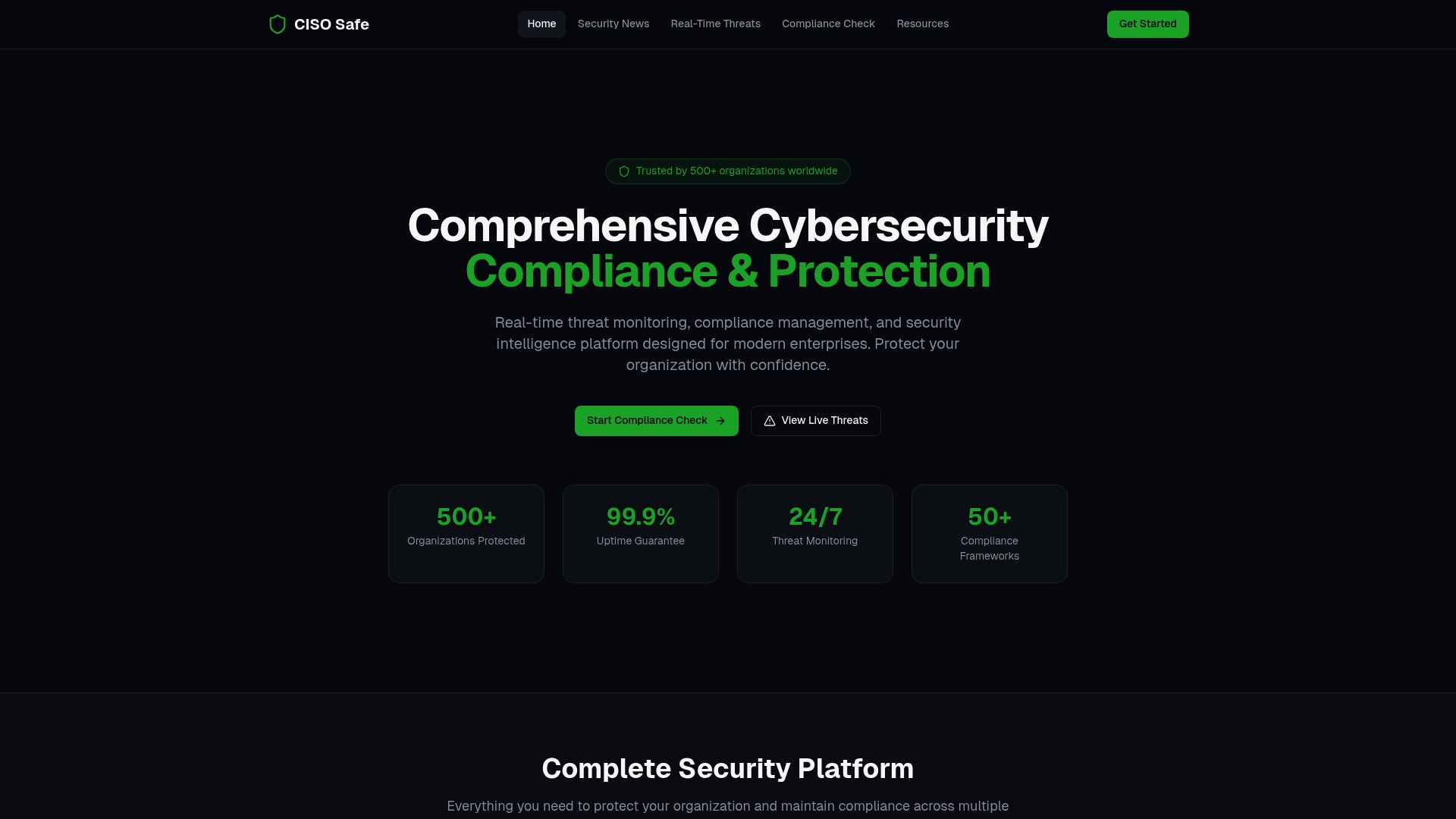
The practical difference CisoSafe delivers is speed and documentation. A firm that engages CisoSafe gets a written risk assessment within the first 60 days, a policy library mapped to Rule 1.6(c) and applicable frameworks, and an incident response plan that has been tested in a facilitated tabletop exercise. When a bar inquiry or regulatory examination arrives, those documents are ready. The firm can point to a specific control, a specific training log, and a specific vendor oversight record for every obligation the examiner raises.
For firms handling regulated clients in healthcare, financial services, or government contracting, CisoSafe's platform also automates compliance assessments across more than 50 frameworks, including HIPAA, SOC 2, CMMC, and PCI DSS, so the ethical duty and the regulatory obligation are addressed in a single, coordinated program.
The next step is straightforward: contact CisoSafe to schedule a security assessment and an initial tabletop exercise scoped to your firm's size, practice areas, and current security posture.
Authoritative sources and recommended further reading
The sources below are the primary authorities practitioners should consult and cite when building a security program, responding to an incident, or defending the firm's conduct before a bar or regulator.
| Source | Why it matters |
|---|---|
| ABA Model Rule 1.6(c) and Comment [18] | Defines the "reasonable efforts" standard for protecting client information; the foundation of every cybersecurity ethical obligation |
| ABA Model Rule 1.1 and Comment [8] | Extends competence to technological literacy; requires lawyers to understand the benefits and risks of the technology they use |
| ABA Model Rule 1.4 | Governs client communication and the materiality trigger for breach notification |
| ABA Model Rules 5.1 and 5.3 | Impose supervisory responsibility over lawyers and nonlawyer assistance, including outsourced vendors |
| ABA Model Rule 1.15 | Requires safekeeping of client property, including electronic files and trust account funds |
| ABA Formal Opinion 483 | Treats data breaches as triggering duties of competence, communication, confidentiality, and supervision; the ABA's most comprehensive cybersecurity ethics opinion |
| NYC Bar Formal Opinion 2024-3 | The most current and detailed formal opinion on cybersecurity incident obligations; covers notification, privilege, ransom, and law enforcement interaction |
| Michigan Bar Cybersecurity Ethics Guidance | Practitioner-focused guidance on risk-based programs, documentation, and vendor oversight |
Recommended further reading:
- Legal industry cybersecurity frameworks for control mapping to NIST and SOC 2
- Cyber compliance and malpractice risk for the connection between security controls and professional liability
- SOC 2 compliance for law firms for evidence collection that satisfies vendor and supervisory obligations
- Cyber risk and firm reputation for executive-level guidance on managing reputational exposure after a breach
This article provides general information about U.S. legal ethics obligations and cybersecurity. It is not legal advice. Lawyers should consult their state bar's ethics counsel and review applicable state rules and formal opinions for guidance specific to their jurisdiction and circumstances.