

Law firms are defined targets for cybercriminals because they hold confidential client data, manage high-value wire transfers, and operate under strict deadlines that create pressure to pay ransoms fast. The types of law firm cyber threats range from phishing and ransomware to business email compromise and insider attacks, each exploiting the legal sector's unique vulnerabilities. Phishing and pretexting account for over 73% of social engineering breaches in law firms. That figure alone tells you where attackers focus first. Understanding each threat category is the foundation of any credible risk management program for legal practices.
What are the top types of cyber threats targeting law firms?
Law firm cyber threats fall into six primary categories, each requiring a distinct defense posture. The legal industry's combination of sensitive data, financial transactions, and time-sensitive workflows makes it a high-value target across all of them.

1. Phishing and pretexting
Phishing is the most common entry point for attackers targeting law firms. Criminals send emails that impersonate judges, clients, opposing counsel, or court systems to trick staff into clicking malicious links or surrendering credentials. Pretexting goes further: attackers build a fabricated scenario over multiple exchanges to establish trust before making a fraudulent request. Once credentials are stolen, attackers move laterally through the network, accessing case files, financial systems, and client communications.
Pro Tip: Run simulated phishing campaigns quarterly. Staff who fail simulations should receive immediate, targeted training rather than generic security reminders.
2. Ransomware
Ransomware encrypts critical case files and locks attorneys out of their systems at the worst possible moment. Ransomware disrupts court-ordered deadlines, creating immediate operational pressure with no manual workaround. The financial damage is severe: 67% of ransomware victims paid the ransom, with an average recovery cost of $2.73 million including downtime. That cost reflects lost billable hours, forensic investigation fees, and reputational damage that follows a public breach.
3. Business email compromise
Business Email Compromise, or BEC, is one of the most financially destructive legal industry cyber threats. Attackers compromise an attorney's email account and use it to redirect wire transfers from trust accounts to criminal-controlled bank accounts. BEC targets trust account wire transfers by exploiting the implicit trust clients and counterparties place in attorney communications. A single successful BEC attack can result in six or seven-figure losses with limited recovery options.
4. Insider threats
Insider threats come from current employees, former staff with residual access, and careless behavior by well-meaning team members. A departing associate who downloads client files, a paralegal who reuses passwords across personal and work accounts, or an IT contractor with excessive permissions all represent real risk. Insider threats are particularly difficult to detect because the activity often looks like normal work. Access controls, least-privilege policies, and user behavior monitoring are the primary defenses.
5. Third-party and vendor risks
Vendor and supply chain attacks increasingly impact law firms by exploiting trusted relationships with legal technology providers, e-discovery platforms, and managed service providers. When a vendor's system is compromised, attackers gain a direct path into every client firm connected to that vendor. Your firm's security posture is only as strong as your weakest vendor's controls. A formal vendor risk management process, including security questionnaires and contract requirements, is not optional at this point.
6. Mobile and remote access threats
Hybrid work models have expanded the attack surface for law firms significantly. Attorneys accessing case management systems from personal devices, unsecured home networks, or public Wi-Fi create multiple entry points that are difficult to monitor. Mobile device management, virtual private networks, and endpoint detection tools address this exposure. Multi-factor authentication stops 99% of password-based attacks and is the single most effective control for remote access security.
Pro Tip: Require MFA on every system that touches client data or financial accounts. No exceptions for senior partners.
How do phishing and social engineering compromise law firm security?
Phishing succeeds because it targets people, not systems. Attackers research a firm's organizational structure, active cases, and key relationships before crafting a convincing email. The message arrives looking like a routine court notice or a client request, and one click is all it takes.
The consequences extend well beyond the initial breach:
- Credential theft gives attackers persistent access to email, document management, and billing systems.
- Lateral movement allows attackers to escalate privileges and reach financial systems or partner-level accounts.
- Data exfiltration often occurs silently for weeks before the firm detects anything.
- Account takeover enables BEC attacks, turning a phishing breach into a wire fraud incident.
75% of law firms have been targeted by cyberattacks, with human risk and identity compromise identified as the primary breach vectors. That pattern confirms that technical controls alone cannot stop phishing. Human risk management, including regular training, simulated attacks, and clear reporting procedures, is a core part of any credible defense program.
Pro Tip: Establish a one-click "report phishing" button in your email client. Firms that make reporting easy see significantly higher staff participation in threat detection.
Why ransomware is particularly damaging for law firms
Ransomware hits law firms harder than most industries because the legal profession runs on deadlines. Missing a court filing, a statute of limitations, or a closing date is not just an operational problem. It is a malpractice exposure.
"Ransomware in the legal sector is uniquely critical because court deadlines create no fallback position. When files are encrypted, firms face an immediate choice between paying the ransom and risking malpractice. There is no middle option when a filing is due in 24 hours."
The threat has escalated further with double extortion tactics. Attackers now encrypt files and simultaneously threaten to publish sensitive client data on public leak sites if the ransom is not paid. This creates two separate crises: operational shutdown and a potential confidentiality breach. The combination puts firms under extreme pressure to pay quickly, which is exactly what attackers intend.
Key ransomware risk factors for law firms include:
- No manual fallback for encrypted case management systems during active litigation
- Client notification obligations triggered by data exposure under state breach notification laws
- Reputational damage from public disclosure of client names and case details
- Cyber insurance complications when firms lack documented security controls at the time of the attack
Tested, offsite backups and a documented incident response plan are the only reliable defenses against ransomware's operational impact.
What governance practices mitigate law firm cybersecurity risks?
Cybersecurity governance in law firms is a leadership responsibility, not an IT function. Governance-level cybersecurity oversight reduces the risk of ethical breaches and client disqualification during audits. Firms that delegate security entirely to IT staff without partner or committee involvement expose themselves to professional liability when a breach occurs.
The governance controls that matter most for law firms:
- Compliance frameworks: SOC 2, ISO 27001, and ABA cybersecurity guidelines provide structured requirements that align security investment with client expectations and regulatory obligations.
- Incident response planning: A written, tested plan that covers legal workflows and court deadline scenarios is the difference between a managed incident and a firm-ending crisis.
- Zero trust architecture: Verify every user and device before granting access, regardless of network location. This limits the damage from compromised credentials.
- Vendor risk management: Require security attestations from all technology vendors. Review them annually.
- Business continuity planning: Maintain offsite, encrypted backups that are tested at least quarterly.
The client side of this equation is shifting as well. 37% of clients are willing to pay more for legal counsel that demonstrates strong cybersecurity measures. Security is becoming a competitive differentiator, not just a compliance checkbox. Firms that document their security posture and communicate it to clients are converting governance investment into business development advantage.
Cyber resilience extends beyond cybersecurity by ensuring operational continuity even when breaches occur. The distinction matters: a firm with strong prevention but no recovery plan is still vulnerable to extended downtime. Resilience requires both.
| Governance control | Why it matters for law firms |
|---|---|
| Partner-level oversight | Ties security decisions to professional liability accountability |
| SOC 2 / ISO 27001 compliance | Provides auditable proof of security controls for client due diligence |
| Tested incident response plan | Reduces downtime and malpractice exposure during active attacks |
| Zero trust access controls | Limits lateral movement after credential compromise |
| Vendor security requirements | Closes supply chain entry points before attackers exploit them |
Key Takeaways
Law firms face the highest cyber risk when phishing, ransomware, and BEC attacks combine with weak governance and untested incident response plans.
| Point | Details |
|---|---|
| Phishing is the primary entry point | Over 73% of social engineering breaches start with phishing or pretexting. |
| Ransomware carries unique legal risk | Court deadlines eliminate fallback options, forcing fast payment decisions. |
| BEC targets trust accounts directly | Compromised attorney emails redirect wire transfers with limited recovery. |
| Governance must involve leadership | Partner-level oversight reduces professional liability and audit exposure. |
| Resilience requires tested recovery | Prevention alone is insufficient. Tested backups and incident plans are mandatory. |
The threat your firm is probably underestimating
Most law firm IT managers I work with have solid perimeter defenses. Firewalls, endpoint protection, email filtering. What they consistently lack is a tested answer to one question: "What do we do in the first four hours of a ransomware attack when a filing is due tomorrow?"
Prevention and resilience are not the same thing. Cyber resilience means knowing your firm can operate after an incident, not just preventing incidents from happening. The firms that recover fastest are not the ones with the most sophisticated tools. They are the ones whose partners have read the incident response plan, whose backups were tested last month, and whose staff know exactly who to call at 2:00 AM.
The other underestimated threat is vendor risk. Firms spend significant energy securing their own environments while giving third-party legal tech vendors essentially unchecked access. One compromised e-discovery platform can expose every matter on it. I have seen firms with excellent internal controls suffer breaches through a vendor they had never formally assessed.
My recommendation is direct: run a tabletop exercise before you need one. Simulate a ransomware attack with a court deadline in play. You will find gaps in your plan within the first 30 minutes that no security audit would have caught.
— vCISO
CisoSafe's approach to law firm cyber risk
Law firms need more than a checklist. They need a security program that understands legal workflows, client confidentiality obligations, and the operational pressure of court deadlines.
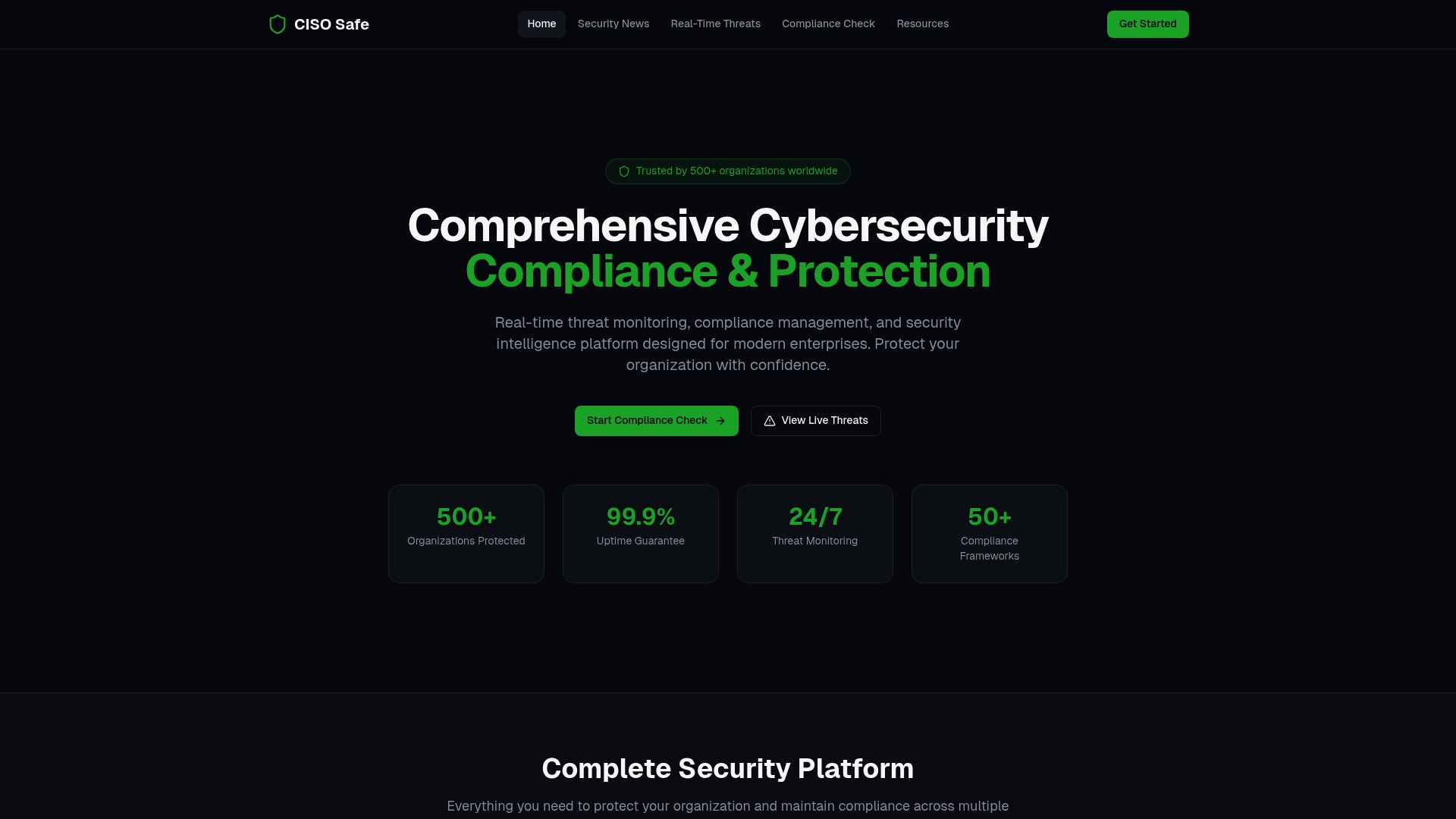
CisoSafe delivers virtual CISO services built specifically for regulated industries, including law firms. The program covers security risk assessments, incident response planning, SOC 2 compliance support, and ongoing advisory that keeps partners informed without overwhelming internal teams. CisoSafe's AI-powered platform automates compliance reporting and penetration testing, giving your firm documented proof of security controls that clients and auditors expect. If your firm is ready to move from reactive security to a defensible, tested program, CisoSafe provides the expertise without the cost of a full-time CISO.
FAQ
What are the most common cyber threats to law firms?
Phishing and pretexting are the leading threats, accounting for over 73% of social engineering breaches. Ransomware, business email compromise, and insider threats follow as the next most damaging categories.
Why are law firms targeted more than other businesses?
Law firms hold confidential client data, manage large wire transfers through trust accounts, and operate under court deadlines that create pressure to pay ransoms quickly. That combination makes them high-value, time-sensitive targets.
What is double extortion ransomware?
Double extortion is a ransomware tactic where attackers both encrypt files and threaten to publish stolen client data publicly if the ransom is not paid. It creates simultaneous operational and confidentiality crises.
How does MFA protect law firm systems?
Multi-factor authentication stops 99% of password-based attacks by requiring a second verification step beyond a password. It is the most effective single control for protecting remote access to case management and financial systems.
What cybersecurity frameworks apply to law firms?
SOC 2, ISO 27001, and ABA cybersecurity guidelines are the primary frameworks relevant to law firms. Compliance with these legal cybersecurity frameworks provides auditable controls that satisfy both regulatory requirements and client due diligence requests.