

NERC CIP compliance is mandatory for registered entities that own or operate assets tied to the U.S. bulk electric system, and it starts with identifying and categorizing your BES Cyber Systems under CIP-002. From there, you implement documented controls mapped to the applicable CIP standards, retain evidence (generally three years), and prepare for ongoing CMEP monitoring from your Regional Entity. CisoSafe helps registered entities build and sustain exactly that kind of audit-ready program.
TL;DR:
- Most audit violations stem from a lack of demonstrable evidence, such as logs or records, rather than the absence of policies.
- Implementing an automated and centralized evidence collection system reduces audit prep time and improves ongoing compliance readiness.
- Regularly reviewing and updating supply chain documentation and access logs is crucial, especially for CIP-013 participation.
- Staying aligned with endorsed NERC guidance documents and tracking standards updates prevents avoidable audit friction.
- Building a risk-based CIP program focused on high-impact areas helps reduce recurring findings and streamlines evidence collection.
Table of Contents
- Who Must Comply With NERC CIP Requirements?
- How Does NERC Monitor and Enforce CIP Compliance?
- What Do the CIP Standards Cover, From CIP-002 to CIP-015?
- How Do You Build a NERC CIP Compliance Program Step by Step?
- What Are the Most Common NERC CIP Audit Findings?
- How a vCISO Operationalizes NERC CIP Compliance
- What Is ERO Enterprise–Endorsed Implementation Guidance?
- What Recent Changes Have Been Made to NERC CIP Standards?
- What Happens If You Fail to Meet NERC CIP Requirements?
- How Does CIP Compliance Fit Into Broader Cybersecurity and Risk Management?
- A Risk-Based View of CIP Compliance
- Build an Audit-Ready NERC CIP Program With CisoSafe
- Sources
Who Must Comply With NERC CIP Requirements?
CIP applicability starts with your functional registration. Balancing authorities, transmission owners and operators, and generator owners and operators are almost always in scope. Distribution providers fall in only when they meet specific criteria, such as owning under-frequency load shedding equipment or serving as a blackstart resource.
Once registration is confirmed, CIP-002 categorization determines everything downstream. You inventory your BES Cyber Systems and sort them into High, Medium, or Not Applicable impact categories based on criteria like generation capacity, transmission voltage, and control center function. That categorization decides which of the remaining CIP standards actually apply to you, since a Medium-impact generator owner faces a different control set than a High-impact control center operator.
Getting registered and categorized right the first time saves months of rework later. Early evidence to produce includes:
- A documented functional registration confirmation from your Regional Entity
- A BES Cyber System inventory with impact ratings and the rationale behind each
- A change log showing when assets move between categories
How Does NERC Monitor and Enforce CIP Compliance?
Monitoring runs through the Compliance Monitoring and Enforcement Program, known as CMEP. NERC and the Regional Entities administer day-to-day oversight, while FERC retains ultimate authority over the reliability standards themselves.
At the center of CMEP sits your Compliance Oversight Plan, or COP. Regional Entities build your COP from an Inherent Risk Assessment (IRA) and an Internal Controls Evaluation (ICE), which together estimate how much risk your operations pose to grid reliability. A higher-risk profile typically means more frequent or deeper monitoring; a mature internal controls environment can reduce audit intensity.
CMEP relies on a defined toolkit:
- Compliance audits, scheduled based on your COP
- Spot checks, triggered by specific risk signals
- Self-certifications, where you attest to compliance status
- Reliability Standards Audit Worksheets (RSAWs), which structure how auditors evaluate each requirement
- The Evidence Request Tool (ERT), which standardizes how auditors ask for supporting documentation
Retention baseline: entities must generally keep evidence for each requirement for three calendar years unless a Compliance Enforcement Authority directs otherwise. Auditors typically request policies, configuration records, access logs, and training documentation going back that far, so evidence retention isn't a bureaucratic afterthought. It's the difference between a clean audit and a scramble.
What Do the CIP Standards Cover, From CIP-002 to CIP-015?
The CIP family spans CIP-002 through CIP-015, and each standard governs a distinct slice of your security program. Knowing which one touches your operations keeps you from either over-building controls you don't need or missing ones you do.
- CIP-002: Categorizes BES Cyber Systems by impact (High, Medium, Low)
- CIP-003: Requires a documented security management program and policies
- CIP-004: Governs personnel risk assessments, training, and access authorization
- CIP-005: Defines electronic security perimeters and remote access controls
- CIP-006: Covers physical security of BES Cyber Systems
- CIP-007: Sets system security management requirements, including patching and ports/services
- CIP-008: Requires incident reporting and response planning
- CIP-009: Mandates recovery plans for BES Cyber Systems
- CIP-010: Governs configuration change management and vulnerability assessments
- CIP-011: Protects BES Cyber System information
- CIP-012: Addresses security of communications between control centers
- CIP-013: Requires supply chain risk management for vendor products and services
- CIP-014: Covers physical security of critical transmission stations and substations
- CIP-015: Adds internal network security monitoring requirements
CIP-007 (system security) and CIP-010 (change management) tend to generate the most day-to-day operational work, since they require continuous evidence rather than a one-time policy sign-off. CIP-013 has drawn increased Regional Entity attention as supply chain risk becomes a bigger part of COP risk scoring.
How Do You Build a NERC CIP Compliance Program Step by Step?
Turning the standards into an operating program comes down to sequencing. Skip steps and you end up with policies that look complete on paper but collapse under an evidence request.
- Confirm registration and finish CIP-002 categorization before building anything else. This determines your entire compliance scope.
- Draft documented processes for every applicable requirement, written in language that matches how your team actually operates, not generic templates.
- Implement the underlying controls: access management, patch and vulnerability tracking, network monitoring, and physical security measures.
- Train personnel and manage access authorizations on a schedule that matches CIP-004's periodic review requirements.
- Build and test incident response and recovery plans, including at least one annual exercise tied to a realistic BES Cyber System scenario.
Evidence management runs in parallel with all five steps. Collect policies, change records, access logs, training rosters, and test artifacts as you go rather than reconstructing them before an audit. Documented processes need demonstrable implementation, meaning a policy without operational records behind it won't hold up.
Use your COP as a prioritization tool, not just a monitoring calendar. If your IRA flags supply chain exposure as a risk driver, put CIP-013 vendor attestations ahead of lower-risk documentation cleanup. Build in quarterly self-assessments and a full RSAW rehearsal at least once before any scheduled audit window.
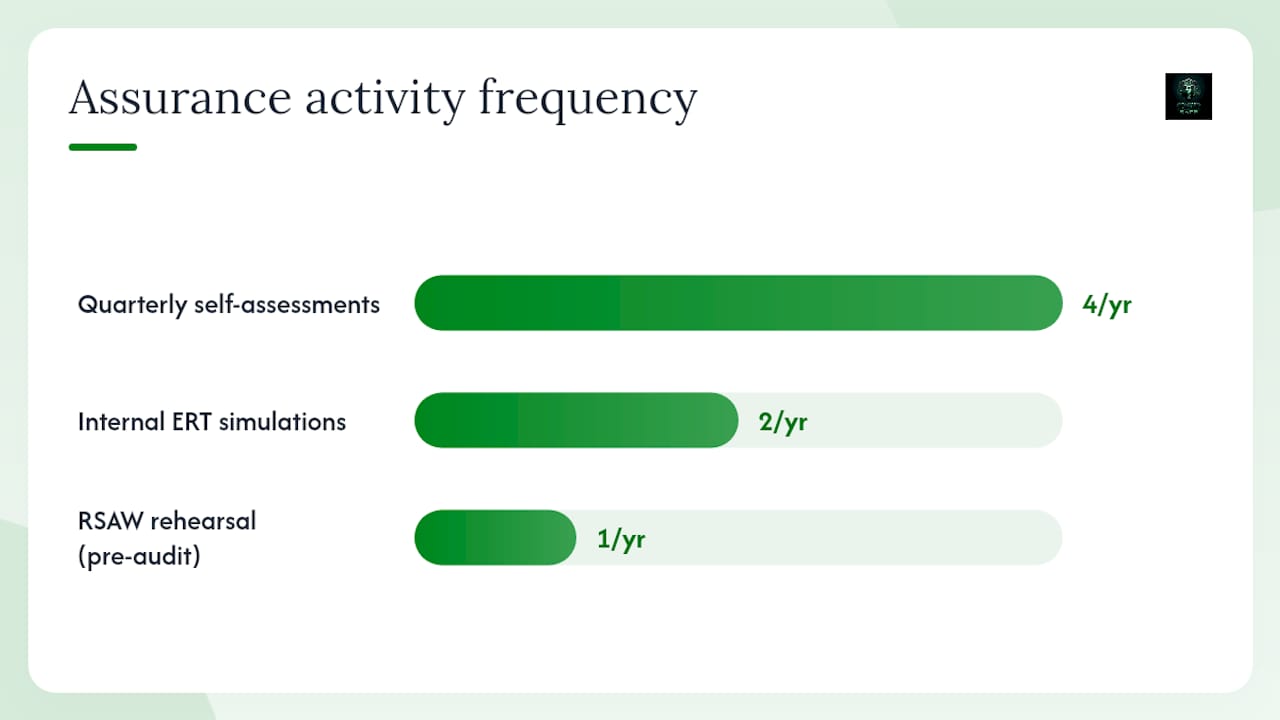
Pro Tip: Run an internal ERT simulation twice a year. Pull the exact evidence categories an auditor would request and time how long it takes your team to produce them. If it takes more than a few days, your evidence repository needs restructuring, not more policies.
What Are the Most Common NERC CIP Audit Findings?
Most violations trace back to a handful of recurring gaps, and nearly all of them share a common thread: a policy existed, but nobody could prove it was followed.
- Missing evidence of implementation. A policy exists, but no logs or records show it was actually executed. Fix it by tying every procedure to a specific, timestamped artifact.
- Incomplete access records. Personnel changes weren't reflected in access revocations within required timeframes. Fix it with automated deprovisioning tied to HR events.
- Weak supply chain documentation. Vendor risk assessments exist but lack contractual security attestations. Fix it by mapping vendor access to BES Cyber Systems and requiring signed attestations from key suppliers.
- Inconsistent patch and vulnerability tracking. Patches get applied, but the review and mitigation plan required by CIP-007 isn't documented. Fix it with a standing patch review log.
Pro Tip: If your evidence folder only contains PDFs of policies, you have a paper program, not a compliance program. Auditors want proof of operation: configuration snapshots, signed test results, and dated logs.
How a vCISO Operationalizes NERC CIP Compliance
A structured vCISO engagement typically moves through six phases: assessment, prioritized roadmap, policy and controls build, implementation support, audit readiness, and continuous monitoring. Each phase produces evidence the next phase builds on, rather than a stack of disconnected deliverables.
Auditor-ready packages generally combine:
- Written policies mapped directly to specific CIP requirement language
- Configuration snapshots showing controls as they existed at a point in time
- Test logs from vulnerability assessments and access reviews
- Training completion records tied to personnel rosters
- Incident response drill documentation, including lessons learned
CisoSafe pairs hands-on vCISO advisory with an AI-powered compliance platform that automates evidence intake and reporting, which shortens the gap between "we have a policy" and "we can prove it" during audit prep.
What Is ERO Enterprise–Endorsed Implementation Guidance?
Not all guidance carries the same weight during an audit. NERC's ERO Enterprise maintains a library of implementation guidance that entities can submit for formal endorsement, and endorsed documents display a red endorsement stamp that signals auditor deference.
That distinction matters in practice. Compliance Guidance, Implementation Guidance, and CMEP Practice Guides are three separate categories, and only properly endorsed Implementation Guidance receives deference during CMEP assessments. Implementation Guidance is industry-developed, describing one acceptable way to meet a requirement's objective, while CMEP Practice Guides are written primarily for ERO staff to standardize how they evaluate evidence.
NERC deliberately allows multiple technical paths to satisfy a requirement's intent. What earns deference isn't picking the "official" method. It's clearly documenting which approach you chose and showing operational evidence that you actually follow it. If you adopt an endorsed guidance document as your compliance approach, cite it directly in your internal policy and keep records that mirror its recommended practices. That alignment gives auditors a fast, credible reference point instead of forcing them to evaluate your custom approach from scratch.
Entities that skip this step often build technically sound programs that still generate audit friction, simply because the auditor has no benchmark to compare against. Checking the current endorsed guidance library before finalizing any new policy is one of the cheapest risk reductions available in a CIP program.
What Recent Changes Have Been Made to NERC CIP Standards?
The CIP standards are not static. NERC periodically revises requirements as new risks emerge, most visibly with the addition of CIP-015 for internal network security monitoring, which extends visibility requirements beyond the electronic security perimeter model that CIP-005 established.
Supply chain requirements under CIP-013 have also seen continued regulatory attention since their original introduction, reflecting growing concern about vendor and third-party access to BES Cyber Systems. Entities that treated CIP-013 as a one-time vendor questionnaire exercise have generally had to revisit and strengthen those programs as expectations matured.
Personnel and training requirements under CIP-004 have been updated across multiple standard versions, tightening timelines for access revocation and clarifying training content expectations. The version currently governing personnel and training evidence, CIP-004-8, reflects that evolution.
For compliance teams, the practical lesson is straightforward: don't treat your CIP program as a project with an end date. Standards get revised on a rolling basis through NERC's standards development process, and Regional Entities update their COPs to reflect new risk priorities as those revisions take effect. Build a process for tracking active standard drafting projects and pending effective dates into your annual compliance calendar, rather than discovering a new requirement only when it shows up on an audit notice. Subscribing to NERC's standards tracking updates and reviewing them quarterly is a low-effort habit that prevents expensive surprises.
What Happens If You Fail to Meet NERC CIP Requirements?
Non-compliance carries real financial and operational consequences, and they compound quickly once a violation is confirmed. FERC has authority to approve penalties that scale with the severity, duration, and risk posed by a violation, and repeated or willful violations draw significantly harsher treatment than a single self-reported gap.
Beyond monetary penalties, a confirmed violation often triggers heightened Regional Entity scrutiny going forward. Your COP risk rating can shift upward, which means more frequent audits, deeper evidence requests, and less benefit of the doubt on borderline judgment calls. That increased oversight burden frequently costs more in staff time than the original penalty.
Reputational exposure is the less-discussed consequence. Violations tied to reliability standards can surface in public NERC enforcement filings, which utility boards, regulators, and increasingly, insurers and lenders, review as part of risk due diligence. A pattern of findings makes every subsequent conversation with your Regional Entity harder, even on unrelated matters.
Self-reporting genuinely helps. Entities that identify and report their own violations before an audit catches them typically face more favorable treatment than those found through external discovery. That's one more reason internal self-assessments and ERT rehearsals aren't optional extras. They're how you find your own gaps before someone else does.
How Does CIP Compliance Fit Into Broader Cybersecurity and Risk Management?
Treating NERC CIP as an isolated compliance exercise wastes most of the security value it could generate. The access controls, monitoring, and incident response capabilities CIP requires overlap heavily with frameworks like NIST CSF and ISO 27001, so building your CIP program with those broader frameworks in mind avoids duplicated work.
A mature security program maps CIP requirements onto its enterprise risk register rather than tracking them in a separate compliance-only spreadsheet. That way, a control gap identified through a CIP self-assessment automatically feeds your broader risk conversations with leadership, instead of sitting in a silo that only surfaces during audit season. Organizations managing operational technology environments alongside CIP obligations benefit from aligning OT-specific security practices with their compliance controls, since the two often govern the same physical assets.
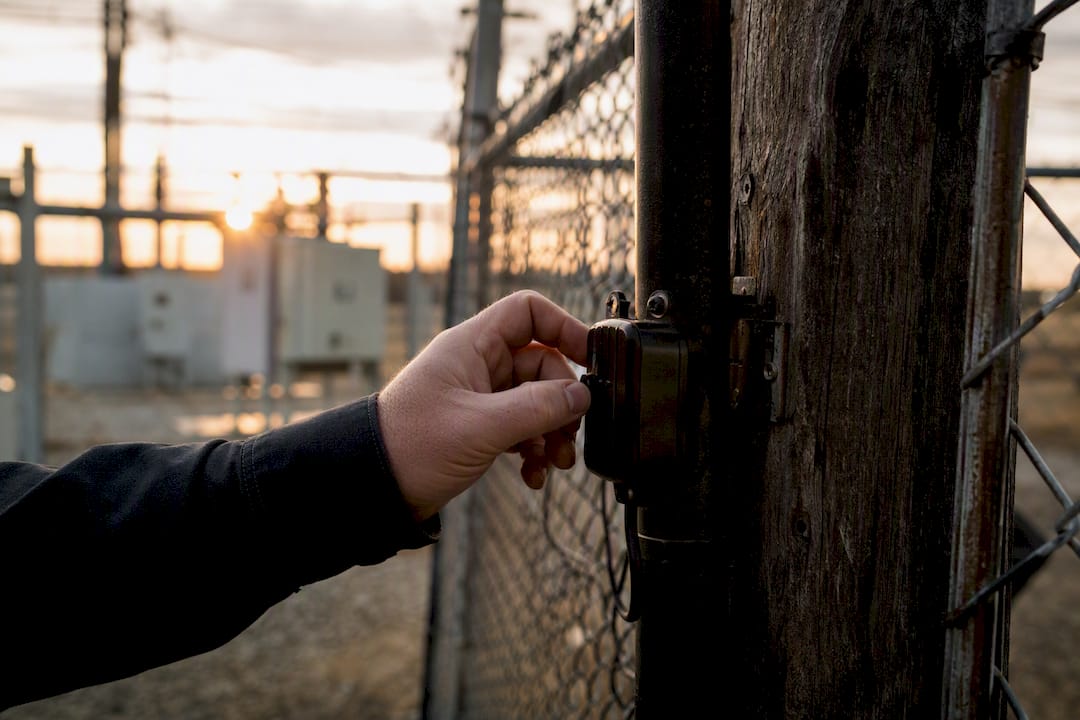
Governance structure matters here too. Clear ownership over who approves policy changes, who signs off on risk acceptances, and who reports compliance status to the board keeps CIP from becoming a purely technical function disconnected from broader security governance. Facilities managing physical perimeter requirements under CIP-006 and CIP-014 also gain from reviewing industrial physical security practices that extend beyond the compliance minimum, particularly around access monitoring and sensor coverage at substations and control centers.
A Risk-Based View of CIP Compliance
The entities that struggle most with NERC CIP compliance are the ones chasing individual requirements in isolation instead of using their COP as a risk roadmap. Aligning security investment to what your IRA and ICE actually flag as high-risk produces stronger reliability outcomes and lower audit friction than treating every requirement as equally urgent.
Programs that mature this way tend to see fewer repeat findings and faster ERT turnaround, because their evidence was built for operational reality, not just checklist completion. Use the categorization and evidence steps in this guide as your starting checklist, and consider a vCISO engagement when program maturity needs to accelerate faster than internal resources allow.
— vCISO
Build an Audit-Ready NERC CIP Program With CisoSafe
CisoSafe operates as your compliance partner for exactly the work this guide describes: building and running an audit-ready NERC CIP program through a combined vCISO retainer and AI-powered compliance platform.
That combination solves the two problems that slow most internal teams down. First, audit prep time drops when evidence collection is automated instead of assembled manually from scattered folders before every RSAW deadline. Second, evidence stays centralized and continuously updated, so a spot check or self-certification request doesn't trigger a scramble across departments. CisoSafe's platform handles compliance intake and reporting across CIP and other regulated frameworks, while the vCISO advisory side builds the prioritized roadmap, policies, and controls tailored to your COP risk profile.
If your team needs a clear-eyed assessment of where your CIP program stands today, CisoSafe offers assessment engagements and case studies showing how the model works in practice. Reach out through cisosafe.com to scope an assessment and see what a fully evidenced, continuously monitored CIP program looks like for your operation.