

Cyber risk assessments are defined as structured evaluations that identify, quantify, and prioritize security vulnerabilities across an organization's IT and operational technology (OT) environments. For energy firms, these assessments are not optional. Over 47% of energy sector risk professionals cite cyber risk as their second-largest IT concern. That figure reflects a sector where a single compromised control system can halt power delivery to millions. The benefits of cyber risk assessments for energy firms extend well beyond compliance checkboxes. They deliver the operational intelligence needed to protect critical infrastructure, satisfy regulators, and justify security investment at the board level.
1. Benefits of cyber risk assessments for energy firms: reducing incident costs
The most direct financial benefit of a cyber risk assessment is catching vulnerabilities before attackers do. An undetected flaw in a SCADA system or industrial control network can trigger downtime that costs far more than any remediation effort. Assessments map your attack surface across both IT and OT environments, giving security teams a prioritized list of exposures to address before they become incidents.
Assessments also expose redundant or unnecessary systems that inflate your attack surface without adding operational value. Identifying and removing these assets reduces both security complexity and licensing costs. The result is a leaner, more defensible environment.

The gap between detection and reality is wider than most energy executives realize. 73% of simulated attacks go unlogged, and 87% go undetected without continuous validation of security controls. That means periodic assessments alone are not enough.
Key cost-reduction actions assessments enable:
- Prioritizing patch cycles based on exploitability, not just severity scores
- Identifying misconfigured firewalls and access controls in OT networks
- Validating that security investments are actually working as intended
- Reducing incident response costs through earlier detection
Pro Tip: Pair your annual assessment with Breach and Attack Simulation (BAS) to continuously test whether your controls would actually stop a real attack. BAS tools run automated, safe attack scenarios against your environment and flag gaps before adversaries find them.
2. Minimizing data breaches and operational disruption
A thorough cyber risk assessment does more than list vulnerabilities. It generates the evidence base for security controls tailored specifically to your OT and IT environments. Energy firms operate a mix of legacy industrial systems and modern cloud-connected infrastructure. Generic security controls rarely fit both. Assessment findings allow security teams to apply the right controls to the right systems.
Quantifying threat scenarios is where assessments deliver their sharpest value. When you can model the business impact of a ransomware attack on a pipeline control system, you move from abstract risk to a dollar figure the CFO can act on. That quantification directly informs business continuity planning and crisis response procedures.
Assessments also draw a clear line between compliance and true resilience. Passing a NERC CIP audit does not mean your environment can withstand a sophisticated nation-state attack. NERC CIP compliance is a regulatory floor, not a ceiling. Assessments reveal the gap between what regulators require and what your actual threat environment demands.
Specific areas where assessments reduce breach impact:
- Mapping data flows between IT and OT to identify unauthorized access paths
- Testing incident response plans against realistic attack scenarios
- Identifying single points of failure in critical operational systems
- Establishing recovery time objectives grounded in actual system dependencies
3. Meeting regulatory compliance requirements in the energy sector
Regulatory compliance is a legal obligation for energy firms, and the financial stakes for failure are severe. NERC CIP penalties can reach $1 million per day per violation. A single missed control can trigger fines that dwarf the cost of a thorough assessment program.
Cyber risk assessments generate the audit-ready evidence that regulators require. They document control effectiveness, identify gaps, and produce remediation records that demonstrate due diligence. For firms subject to multiple frameworks, a well-structured assessment maps findings simultaneously to NERC CIP, IEC 62443, and TSA pipeline security directives.
The compliance landscape for energy firms includes:
- NERC CIP covers bulk electric system cybersecurity and requires documented risk management processes.
- IEC 62443 sets security standards for industrial automation and control systems.
- TSA Pipeline Security Directives mandate cybersecurity incident reporting and access control for pipeline operators.
- NIST CSF 2.0 provides a voluntary but widely adopted framework for managing and reducing cybersecurity risk.
Continuous validation matters here as much as it does for incident prevention. Automated penetration testing and continuous testing platforms identify compliance gaps faster than annual point-in-time assessments. Regulators increasingly expect evidence of ongoing monitoring, not just annual snapshots. Firms that build continuous assessment into their programs stay ahead of evolving regulatory expectations rather than scrambling before each audit cycle. For a full breakdown of applicable standards, the energy sector compliance frameworks overview covers current requirements in detail.
4. Enhancing risk visibility for board-level decisions
Energy executives cannot fund what they cannot see. Cyber risk assessments translate technical vulnerabilities into business impact language that boards and C-suites can act on. 70% of CISOs use quantified assessments to justify security budgets and elevate cybersecurity in executive decision-making. That figure reflects a fundamental shift in how security leaders communicate risk.
Frameworks like NIST CSF 2.0 and ISO 31000 provide the structure for mapping cyber risks directly to enterprise risks. A vulnerability in a substation control system is not just a technical problem. It is a threat to revenue, regulatory standing, and public safety. Assessments that use these frameworks produce outputs boards can read and act on.
"Framing cybersecurity risk as a core business risk empowers CISOs to secure investment and align security initiatives with operational performance goals."
Key outputs that improve board-level visibility:
- Quantified risk scenarios with financial impact estimates
- Heat maps showing risk concentration across business units
- Trend data comparing risk posture over time
- Clear linkage between security investment and risk reduction
The cybersecurity governance in energy guide provides a practical framework for structuring these board communications.
5. Strengthening OT and IT security integration
Energy firms operate two distinct technology environments that must function as one security program. OT systems control physical processes. IT systems handle data and business operations. Assessments that treat these environments separately miss the most dangerous attack paths, which typically cross from IT into OT.
A well-scoped assessment maps the interfaces between IT and OT networks, identifies where segmentation has failed, and tests whether an attacker who compromises an email system could reach a turbine controller. This cross-environment view is what separates a useful assessment from a compliance exercise.
Energy firms achieve true operational resilience by layering compliance requirements with enterprise risk frameworks and integrating cyber events into industrial safety processes. That integration requires an assessment methodology that spans both environments. The industrial cybersecurity assessment types guide covers the specific assessment formats designed for OT environments.
6. Addressing supply chain and third-party cyber risks
Energy firms depend on hundreds of vendors, contractors, and technology suppliers. Each one represents a potential entry point into your environment. Assessments that include supply chain risk analysis identify which third parties have access to critical systems and whether their security practices meet your standards.
Third-party risk is not theoretical. Attackers routinely target smaller vendors with weaker security controls to gain access to larger energy operators. A cyber risk assessment that maps vendor access and evaluates third-party security posture closes this gap. For executives who need a deeper understanding of this exposure, the supply chain cyber risk analysis covers the specific threat patterns relevant to energy operators.
7. Common challenges and best practices for energy firm assessments
The biggest obstacle to effective cyber risk assessment in energy firms is the divide between OT and IT teams. The most common pitfall is failing to integrate cyber events into existing Process Hazard Analysis, leaving OT teams disconnected from the broader security program. Assessments conducted in silos produce incomplete findings and miss the cross-environment risks that matter most.
Best practices for overcoming these challenges:
- Assign a single assessment owner who has authority over both IT and OT scope
- Include process engineers in OT assessment interviews, not just IT staff
- Map cyber risks to CMEP risk elements to prioritize findings by regulatory impact
- Use digital twins to simulate attack scenarios without disrupting live operations
- Schedule assessments to align with planned maintenance windows in OT environments
Digital twins and real-time simulations provide continuously updated risk profiles, enabling proactive control adjustments and strategic planning. This approach moves assessment from a periodic event to a continuous capability.
| Challenge | Best Practice |
|---|---|
| IT and OT team silos | Appoint a cross-functional assessment lead with authority over both domains |
| Incomplete asset inventory | Conduct passive OT network discovery before scoping the assessment |
| Compliance-only focus | Map findings to both regulatory requirements and operational risk scenarios |
| Infrequent testing cycles | Implement continuous validation tools between formal assessment cycles |
Pro Tip: Use a vendor-agnostic assessment methodology. Assessors with no product to sell produce findings based on your actual risk, not on gaps their tools happen to detect. This produces more accurate prioritization and avoids scope bias.
Key takeaways
Cyber risk assessments give energy firms the specific, evidence-based intelligence needed to protect critical infrastructure, meet regulatory requirements, and make defensible security investment decisions.
| Point | Details |
|---|---|
| Cost reduction through early detection | Assessments identify exploitable vulnerabilities before incidents occur, avoiding costly downtime and remediation. |
| Regulatory compliance evidence | Structured assessments generate audit-ready documentation for NERC CIP, IEC 62443, and TSA directives. |
| Board-level risk communication | Quantified findings translate technical risk into business impact language executives can act on. |
| OT and IT integration | Cross-environment assessments expose the attack paths that siloed programs miss entirely. |
| Continuous validation | Pairing formal assessments with ongoing testing closes the gap between annual snapshots and real-time threats. |
The compliance trap most energy firms fall into
After working with energy operators across the US, the pattern I see most often is firms that treat cyber risk assessments as a compliance deliverable rather than an operational tool. They schedule the assessment before the NERC CIP audit, collect the report, file it, and move on. The findings sit in a PDF until the next audit cycle.
That approach produces compliance on paper and vulnerability in practice. 70% of energy CEOs anticipate cybercrime will significantly impact the sector within three years. The threat is not waiting for your next scheduled assessment.
The firms that get real value from assessments treat findings as a living risk register. They assign owners to each finding, track remediation progress, and validate fixes with follow-on testing. They use NIST CSF 2.0 not as a checklist but as a maturity model that connects security improvements directly to operational continuity goals.
The other shift I push hard on is integrating assessment findings into enterprise risk management. Cyber risk does not live in the IT department. A compromised OT system is an operational risk, a safety risk, and a regulatory risk simultaneously. Assessments that feed into the enterprise risk framework get the executive attention and budget they deserve. Assessments that stay inside the security team get deprioritized.
The energy sector is moving toward continuous resilience. The firms that will manage this transition well are the ones building assessment into their operating rhythm now, not treating it as an annual obligation.
— vCISO
How CisoSafe supports energy firm cyber risk programs
Energy firms managing NERC CIP obligations, OT security gaps, and board-level reporting pressure need more than a periodic assessment report.
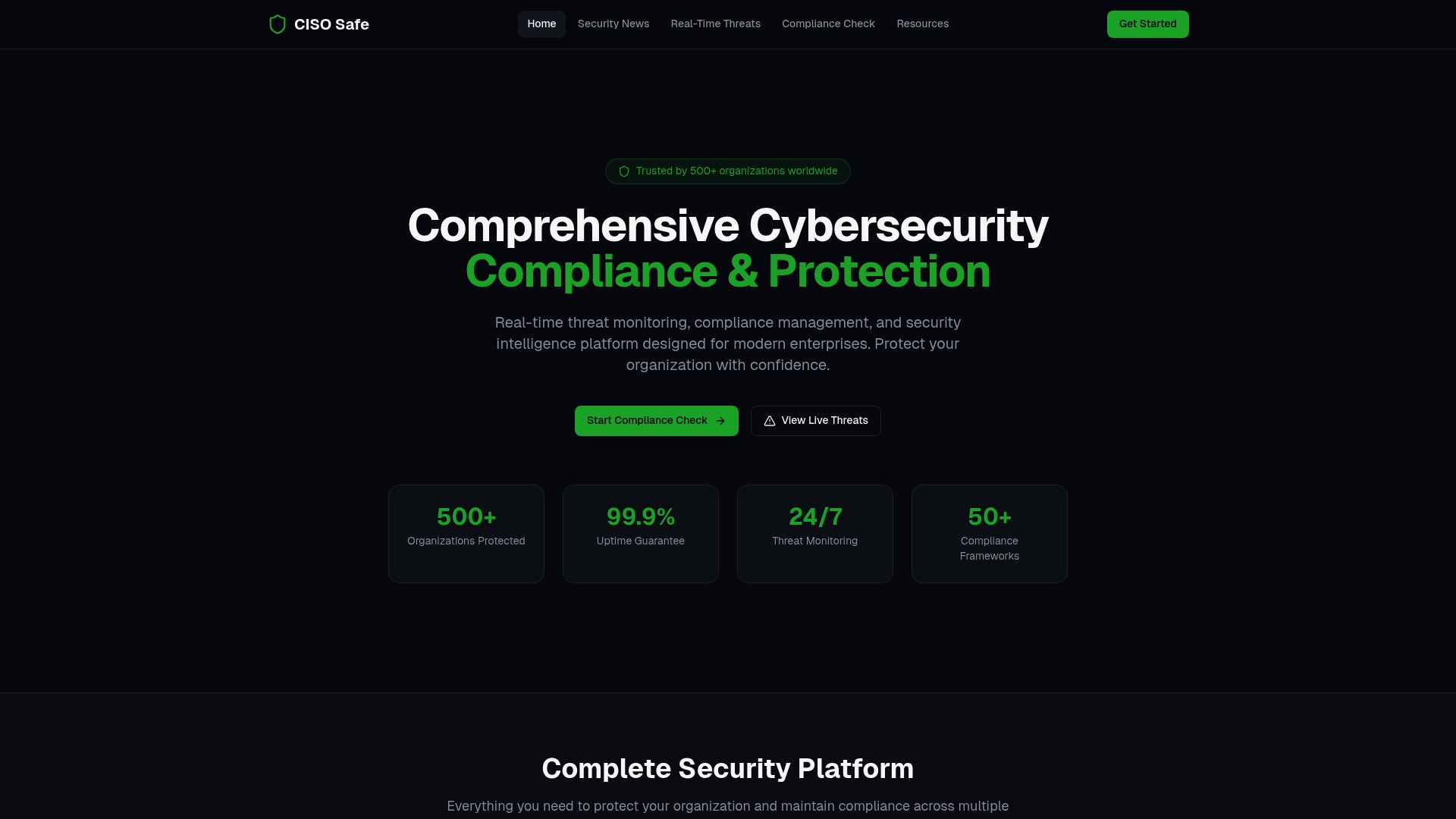
CisoSafe delivers virtual CISO services built specifically for regulated energy operators. The CisoSafe team combines hands-on security assessments with AI-powered compliance reporting, giving your leadership team clear visibility into risk without requiring a full-time internal CISO. From generating audit-ready NERC CIP evidence to mapping OT vulnerabilities against enterprise risk frameworks, CisoSafe provides the expertise energy firms need at a fraction of the cost of a large consultancy. If your firm needs a structured path from assessment findings to remediation and compliance, CisoSafe is built for exactly that.
FAQ
What are the main benefits of cyber risk assessments for energy firms?
Cyber risk assessments identify vulnerabilities in OT and IT environments, generate regulatory compliance evidence, and translate technical risks into business impact data for executive decision-making. They reduce incident costs by catching exploitable gaps before attackers do.
How do cyber risk assessments support NERC CIP compliance?
Assessments produce the documented control evidence and gap analysis that NERC CIP audits require. NERC CIP penalties can reach $1 million per day per violation, making assessment-driven compliance documentation a direct financial protection measure.
How often should energy firms conduct cyber risk assessments?
Energy firms should conduct formal assessments at least annually, but pair them with continuous validation tools like automated penetration testing to maintain real-time visibility between cycles. Regulatory changes and major infrastructure upgrades should also trigger reassessment.
What is the difference between OT and IT cyber risk assessments?
IT assessments focus on data systems, networks, and business applications. OT assessments evaluate industrial control systems, SCADA networks, and physical process controllers. Effective energy sector programs assess both environments together to identify cross-domain attack paths.
Why do energy firms need a vCISO for cyber risk assessments?
A virtual CISO brings senior-level expertise in energy-specific frameworks like NERC CIP and IEC 62443 without the cost of a full-time hire. vCISO services provide structured assessment programs, remediation roadmaps, and board-ready reporting tailored to the energy sector's regulatory and operational demands.