

Industrial cybersecurity assessments are specialized evaluations of industrial control systems (ICS) and operational technology (OT) environments that identify vulnerabilities, measure compliance gaps, and verify that critical processes remain protected. The recognized industry term for this practice is "OT security assessment," though the broader category of industrial cybersecurity assessment types covers everything from gap analyses to full penetration tests. Standards like IEC 62443 and regulations like the EU NIS2 directive now define minimum assessment expectations for energy, oil and gas, manufacturing, and other regulated sectors. Assessment duration ranges from 1–2 weeks for basic architecture reviews to 3–4 weeks for comprehensive evaluations. That range reflects the significant difference in scope, risk exposure, and organizational maturity across industrial operators.
1. What are the primary industrial cybersecurity assessment types?
Six core assessment types cover the full spectrum of industrial security evaluation methods. Each serves a distinct purpose and fits a specific stage of an organization's security program.
- Gap Assessment. A gap assessment compares your current security controls against a target framework such as IEC 62443 or NIST SP 800-82. It identifies where your program falls short without requiring active testing. This is the right starting point for organizations that have never conducted a formal security review.
- ICS Risk Assessment. An ICS risk assessment identifies threats to industrial control systems and scores them by likelihood and potential impact on operations, safety, and finances. IEC 62443-3-2 evaluates risks against safety, production loss, product quality, financial, legal, and reputational impacts. This makes it the most thorough cybersecurity risk assessment type for regulated industrial environments.
- Vulnerability Assessment. A vulnerability assessment scans OT networks, PLCs, RTUs, and HMIs to catalog known weaknesses. It produces a prioritized list of exposures without attempting to exploit them.
- Penetration Testing. Penetration testing goes one step further by simulating real attacker behavior against OT systems. It requires strict controls in industrial environments to avoid triggering safety mechanisms or disrupting live processes.
- Compliance Assessment. A compliance assessment verifies that your security program meets a specific regulatory or contractual requirement, such as IEC 62443, NERC CIP, or CMMC. It produces documentation suitable for auditors and regulators.
- Cybersecurity Maturity Assessment. A cybersecurity maturity assessment measures how consistently and effectively your organization applies security practices over time. It produces a maturity score and a prioritized improvement roadmap.
Pro Tip: Start with a gap or maturity assessment if your OT security program is under two years old. These assessments reveal the highest-priority gaps without the operational risk of active testing.
2. How do IEC 62443 standards shape industrial security evaluations?

IEC 62443 is the de facto industrial cybersecurity standard and the primary framework shaping how assessments are structured, scoped, and reported. The EU NIS2 directive references IEC 62443 as a recognized compliance path for critical infrastructure operators. That regulatory alignment makes IEC 62443 fluency non-negotiable for any organization in energy, utilities, or process manufacturing.
The standard organizes industrial environments into zones and conduits. Each zone groups assets with similar security requirements. Each conduit controls communication between zones. Assessments built on IEC 62443 map every asset to a zone, then evaluate the security controls protecting each conduit.
- Define the system under consideration. Identify all OT assets, network segments, and external connections within scope.
- Partition into zones and conduits. Group assets by function and risk profile, then document all communication paths between zones.
- Assess impact categories. IEC 62443-3-2 mandates evaluation across safety, production continuity, product quality, financial exposure, legal liability, and reputational damage.
- Assign Target Security Levels (SL-T). Set the required protection level for each zone based on threat likelihood and consequence severity.
- Measure Achieved Security Levels (SL-A). Evaluate what your current controls actually deliver against the SL-T requirement.
- Identify gaps and remediation priorities. Document the delta between SL-T and SL-A and build a remediation roadmap.
IEC 62443 maps to seven Foundational Requirements across four security levels, SL1 through SL4. SL1 addresses protection against casual or unintentional violations. SL4 addresses protection against state-sponsored adversaries with sophisticated capabilities.
Pro Tip: Security levels are dynamic. SL-T must be re-evaluated whenever system architecture changes, new assets are added, or threat intelligence identifies new attack vectors targeting your sector.
3. What operational factors affect OT cybersecurity assessments?
OT environments introduce constraints that have no equivalent in IT security assessments. A network scan that takes seconds on a corporate laptop can crash a PLC or trigger an unplanned shutdown in an industrial control system. Every assessment methodology must account for this reality.
The passive-first methodology is the standard starting point for OT assessments. Passive analysis uses packet captures, flow log review, configuration file analysis, and structured interviews to build a complete picture of the environment without sending a single active probe. This approach identifies a large percentage of significant risks with zero operational disruption.
Active testing follows passive analysis only when passive methods leave critical questions unanswered. Active testing in OT requires:
- Written approval from operations leadership and the plant safety officer before any active probe is sent
- Protocol-aware tools that understand Modbus, DNP3, EtherNet/IP, and other industrial protocols rather than generic IT scanners
- Rate limiting on all active scans to prevent flooding devices that cannot handle high packet volumes
- Real-time monitoring by an operations engineer during active testing to catch any anomalies immediately
- Post-test validation confirming no alarms, faults, or process deviations occurred as a result of testing
Generic IT scanning tools generate significant false positives in OT environments. Manual engineering judgment is the only reliable filter. An experienced OT security assessor distinguishes between a real vulnerability and a benign artifact of industrial protocol behavior.
Pro Tip: Scope your assessment to include the IT/OT boundary. Most successful attacks on industrial systems enter through corporate IT networks and pivot into OT. The remote monitoring cyber risk at that boundary is frequently the highest-priority finding in any OT assessment.
4. How to choose the right assessment type for your organization
Assessment types function as a menu rather than a fixed sequence. The right choice depends on your current security maturity, your most pressing compliance deadline, and the specific operational questions you need answered.
| Assessment Type | Primary Focus | Typical Duration | Resource Intensity |
|---|---|---|---|
| Gap Assessment | Framework alignment | 1–2 weeks | Low |
| ICS Risk Assessment | Threat and impact scoring | 2–3 weeks | Medium |
| Vulnerability Assessment | Known weakness catalog | 1–2 weeks | Low to medium |
| Penetration Test | Exploitability verification | 2–4 weeks | High |
| Compliance Assessment | Regulatory documentation | 1–3 weeks | Medium |
| Maturity Assessment | Program effectiveness | 1–2 weeks | Low |
Organizational maturity determines the starting point. Organizations new to OT security should begin with a Compromise Assessment or Architecture Review. These assessments answer the most urgent question: has the environment already been breached, and what does the current architecture expose? Organizations with mature programs benefit most from full OT Cybersecurity Assessments or Cybersecurity Architecture Design Reviews that stress-test existing controls against current threat intelligence.
Combining assessment types produces the clearest risk picture. A gap assessment followed by a targeted vulnerability assessment and a compliance review gives leadership a complete view of technical exposure, framework alignment, and regulatory standing. For organizations in energy sector governance, this combination directly supports IEC 62443 and NERC CIP compliance documentation.
Pro Tip: When selecting a vendor cybersecurity assessment partner, verify that their team includes both certified cybersecurity professionals and licensed industrial engineers. Security expertise alone is insufficient for OT environments where physical consequences matter.
Key takeaways
Selecting the right industrial cybersecurity assessment type requires matching the method to your organization's maturity level, compliance obligations, and operational risk profile.
| Point | Details |
|---|---|
| Start with passive methods | Passive analysis identifies most OT risks without disrupting live industrial processes. |
| IEC 62443 structures every assessment | Zone and conduit partitioning with SL-T assignment is the foundation of compliant OT risk evaluation. |
| Maturity determines assessment choice | New programs start with gap or compromise assessments; mature programs run full OT evaluations. |
| Active testing requires strict controls | Protocol-aware tools, written approvals, and post-test validation are non-negotiable in OT environments. |
| Assessments are not one-time events | Security levels must be re-evaluated whenever systems change or new threats emerge. |
What most industrial cybersecurity assessments get wrong
The most common mistake I see in OT security assessments is treating them as vulnerability-counting exercises. A report that lists 200 findings without scoring them by attacker feasibility and physical consequence is not an assessment. It is a catalog. The real value of any industrial security evaluation is the evidence-based exposure analysis that tells operations leadership which three findings could cause a safety incident and which 150 are theoretical noise.
Effective OT risk modeling integrates attacker feasibility with physical or safety impacts. That combination is what separates an OT-native assessment from an IT assessment applied to industrial systems. I have reviewed assessments from organizations that spent significant budget on penetration testing before they had completed a basic gap assessment. The penetration test found exploitable paths, but the organization lacked the baseline documentation to prioritize remediation. Sequence matters.
The second mistake is treating the assessment as a compliance checkbox rather than a strategic input. Standards like IEC 62443 require dynamic reassessment as systems evolve. A one-time assessment satisfies an audit. A continuous reassessment program actually reduces risk. The organizations that get the most value from their security investments treat each assessment as a data point in an ongoing risk management program, not a project with a close date.
— vCISO
CisoSafe supports your industrial cybersecurity assessment program
Regulated industrial organizations face a real challenge: the expertise required to conduct IEC 62443-aligned assessments is expensive, and the operational sensitivity of OT environments makes generic security firms a liability rather than an asset.
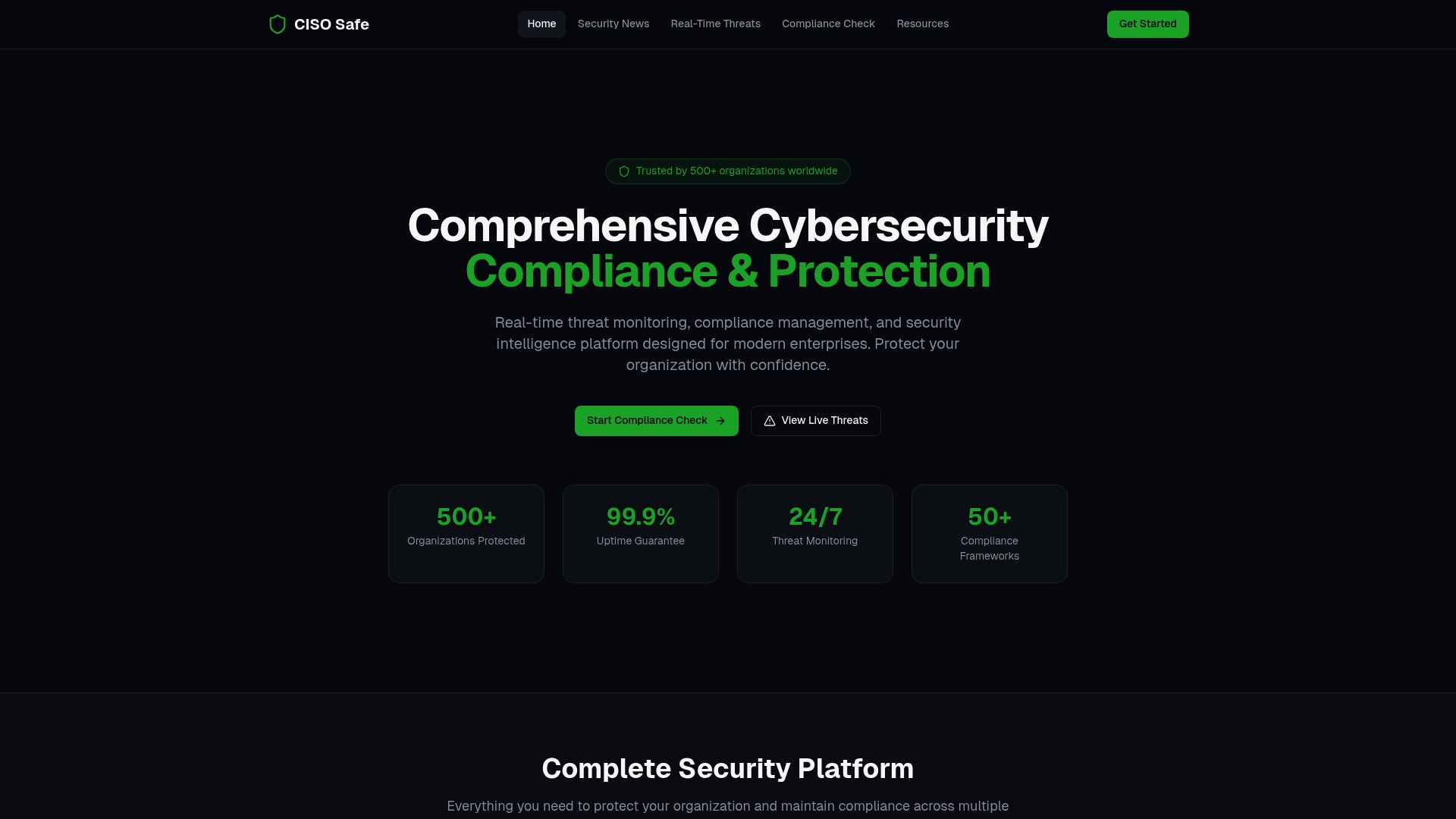
CisoSafe provides virtual CISO and compliance services built specifically for regulated, high-stakes industries including oil and gas, energy operations, and process manufacturing. The CisoSafe team combines certified cybersecurity professionals with deep experience in IEC 62443, NERC CIP, and CMMC compliance. Organizations working with CisoSafe get a structured assessment program, a prioritized risk roadmap, and ongoing security governance without the cost of a full-time CISO. Contact CisoSafe to align your assessment program with your compliance requirements and operational risk profile.
FAQ
What is the difference between a vulnerability assessment and a penetration test?
A vulnerability assessment catalogs known weaknesses without attempting to exploit them. A penetration test actively simulates attacker behavior to verify whether those weaknesses are actually exploitable under real conditions.
How long does an industrial cybersecurity assessment take?
Basic architecture reviews take 1–2 weeks. Comprehensive OT security evaluations require 3–4 weeks depending on environment size and assessment scope.
What does IEC 62443 require from a risk assessment?
IEC 62443-3-2 requires organizations to partition their OT environment into zones and conduits, assess impacts across safety, financial, and operational categories, and assign Target Security Levels to each zone.
Can standard IT security tools be used for OT assessments?
Generic IT scanning tools generate false positives in OT environments and can fault sensitive devices like PLCs and RTUs. OT assessments require protocol-aware tools and manual engineering judgment to produce accurate results.
How often should industrial cybersecurity assessments be repeated?
Security levels must be re-evaluated whenever system architecture changes, new assets are added, or significant new threats emerge. Annual assessments are a minimum baseline for most regulated sectors.