

The U.S. energy sector faces a persistent, escalating threat from both nation-state actors and organized cybercriminals targeting power grids, oil pipelines, and natural gas systems. Understanding these threats is not optional for energy professionals. It is the foundation of every sound risk management decision your organization makes.
The most common cyber threats targeting energy infrastructure include:
- Ransomware: Malicious software that encrypts operational systems or threatens data exposure to extort payment
- Phishing: Deceptive emails used to steal credentials or deliver malware into control system networks
- Advanced Persistent Threats (APTs): Long-term, stealthy intrusions by nation-state actors seeking espionage or pre-positioned disruption capability
- Supply chain attacks: Compromises introduced through third-party software or vendor access
- Operational Technology (OT) exploits: Attacks targeting industrial control systems (ICS) and SCADA platforms that manage physical energy delivery
Presidential Policy Directive 21 designates the energy sector as uniquely critical because it provides an "enabling function" across every other critical infrastructure sector. The Department of Energy (DOE) serves as the Sector Risk Management Agency, while the Cybersecurity and Infrastructure Security Agency (CISA) coordinates cross-sector defense. Regulatory standards like NERC CIP govern electric utility cybersecurity, and frameworks like the Cybersecurity Capability Maturity Model (C2M2) guide sector-wide preparedness. A successful attack on energy infrastructure can cascade into disruptions across healthcare, transportation, water systems, and financial services simultaneously.
Who is targeting U.S. energy infrastructure, and why?
Two primary adversary groups dominate the energy sector threat landscape: nation-state advanced persistent threat groups and financially motivated cybercriminals. Their tactics differ, but both pose serious operational risk.

| Threat Actor | Primary Motivation | Common Tactics | Target Sub-Sectors |
|---|---|---|---|
| Nation-state APTs | Espionage, pre-positioning, disruption | Supply chain compromise, ICS exploitation, long-dwell intrusions | Electric grid, oil and gas pipelines |
| Organized cybercriminals | Financial gain | Ransomware, phishing, credential theft | Power utilities, midstream oil and gas |
| Hacktivists | Political messaging | DDoS, defacement, data leaks | Public-facing energy operators |

A 2022–2024 incident dataset confirms that financially motivated attacks are the most common category, with politically driven campaigns running a close second. Power generation and oil and gas are the most exposed sub-sectors. Nation-state actors, particularly those linked to Russia, China, and Iran, have demonstrated the capability and intent to compromise industrial control systems for future disruptive use. The SolarWinds Orion compromise in December 2020, attributed to Russia's SVR, showed how a single software supply chain vulnerability can give adversaries persistent access across hundreds of critical infrastructure organizations simultaneously.
How do cybersecurity frameworks prepare the energy sector?
The energy sector's preparedness posture is shaped by several authoritative frameworks and regulatory requirements that every decision-maker should know.
The C2M2 (Cybersecurity Capability Maturity Model) provides a structured self-evaluation tool that helps energy organizations measure their current security practices against defined maturity levels. It covers domains from asset management to incident response, giving leadership a clear picture of where gaps exist. The Risk Management Process (RMP), aligned with NIST guidance, gives organizations a repeatable method for identifying, assessing, and treating cyber risks across both IT and OT environments.
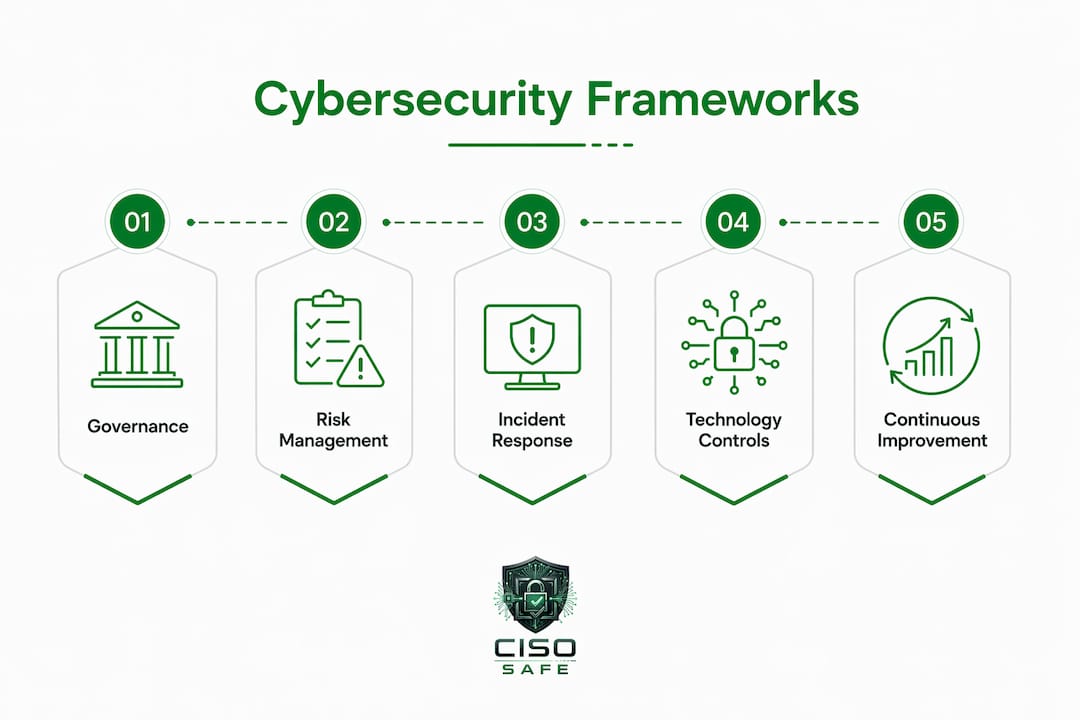
On the regulatory side, NERC CIP standards set mandatory cybersecurity requirements for bulk electric system operators, covering everything from access controls to incident reporting. These standards continue to evolve as threats and technology advance. Over 80% of U.S. energy infrastructure is privately owned, which means the primary burden of implementing these frameworks falls on private sector operators, not government agencies.
Top preparedness strategies for energy organizations include:
- Conducting regular C2M2 self-assessments to identify maturity gaps
- Implementing NERC CIP controls across all applicable bulk electric system assets
- Maintaining a current asset inventory covering both IT and OT systems
- Establishing a formal cyber risk register aligned with the NIST Risk Management Framework
- Segmenting IT and OT networks to limit lateral movement after an initial breach
- Developing and testing a written incident response plan at least annually
Pro Tip: Cybersecurity works best when it is built into digital transformation projects from day one. Treating it as an enabling function of modernization, rather than a compliance checkbox added afterward, produces far stronger and more cost-effective outcomes.
How does information sharing strengthen energy sector defenses?
Bi-directional cyber risk information sharing is one of the most effective and underused tools available to energy sector organizations. When threat intelligence flows freely between operators, government agencies, and sector partners, the entire ecosystem detects and responds to emerging threats faster than any single organization could alone.
Key programs and forums that facilitate this exchange include:
- E-ISAC (Electricity Information Sharing and Analysis Center): Operated by NERC, it collects and distributes threat intelligence specifically for electric sector participants
- ONG-ISAC (Oil and Natural Gas Information Sharing and Analysis Center): Serves upstream and downstream oil and gas operators with sector-specific threat data
- CISA's Automated Indicator Sharing (AIS): Enables real-time machine-to-machine sharing of threat indicators between federal agencies and private sector partners
- DOE's CESER program: Coordinates government-funded cybersecurity research, tools, and threat briefings for energy sector stakeholders
Organizations that actively participate in these networks gain early warning of attack campaigns before they reach their own systems. Proactive incident reporting, even for near-misses, contributes intelligence that protects peer organizations and strengthens the collective defense posture across the sector.
Pro Tip: Assign a dedicated staff member or vCISO to monitor ISAC alerts and translate incoming threat intelligence into specific actions for your security team. Passive membership in these networks delivers far less value than active engagement.
What does a strong cybersecurity resilience posture look like?
Building real resilience against energy industry cyber risks requires more than perimeter defenses. It demands a layered, continuously tested security program that accounts for the unique operational constraints of energy infrastructure.
Third-party and vendor risk is one of the most consequential blind spots in the sector. Breaches originating from vendors with weaker security practices can trigger both operational disruption and regulatory fallout for energy firms. Every vendor with network access should undergo a formal security assessment before onboarding, with contractual controls requiring minimum security standards. For deeper guidance on managing these exposures, the supply chain security challenges facing energy operators are well-documented and require structured mitigation programs.
Data exfiltration without encryption is an escalating tactic. Attackers increasingly extract sensitive data quietly and threaten public exposure rather than encrypting systems for ransom. This approach is harder to detect and complicates traditional ransomware defenses. Defending against it requires enhanced monitoring for unusual data movement, not just malware signatures. Reviewing data exfiltration prevention practices built for enterprise environments is a practical starting point.
Prioritized resilience actions for energy organizations:
- Develop and exercise a written incident response plan with tabletop scenarios specific to energy operations
- Implement continuous monitoring across both IT and OT environments
- Establish a formal third-party risk management program with vendor security assessments
- Deploy network segmentation between corporate IT and operational technology systems
- Govern employee use of AI tools to prevent unauthorized data exposure
- Align cyber insurance coverage with your actual control environment and governance posture
Pro Tip: Cyber insurance policies increasingly require documented controls and governance practices before they pay out on claims. Align your insurance coverage with your actual security program, not just your policy application answers.
CisoSafe expert insights on mitigating cyber risks in the U.S. energy sector
The threat environment facing U.S. energy operators has shifted in ways that demand a broader executive focus. Disruption prevention remains critical, but protecting sensitive operational and business data from quiet exfiltration is now equally urgent.
CisoSafe works directly with energy operators, oil and gas companies, and other regulated infrastructure clients across the United States. The firm's vCISO services cover security assessments, risk roadmaps, policy development, and incident response planning, all delivered at a fraction of the cost of a full-time CISO. For energy organizations navigating cybersecurity governance requirements in 2026, having specialized expertise on call is a practical and cost-effective defense layer.
Historical cyber attacks that shaped energy sector security
Several landmark incidents have defined how the sector understands and responds to cyber threats.
Ukraine Power Grid Attack (2015 and 2016): Russian-linked threat actors used spear-phishing to gain access to Ukrainian utility networks, then deployed the BlackEnergy and Industroyer malware to take substations offline. The 2015 attack cut power to roughly 230,000 customers. These were the first confirmed cyberattacks to cause physical power outages, and they fundamentally changed how ICS security is approached globally.
Colonial Pipeline Ransomware (2021): The DarkSide ransomware group compromised Colonial Pipeline's IT network, forcing the company to shut down 5,500 miles of pipeline as a precaution. Fuel shortages spread across the U.S. East Coast within days. The attack demonstrated that even an IT-side compromise, without direct OT intrusion, can force operational shutdowns with national economic consequences.
SolarWinds Supply Chain Compromise (2020): Russia's SVR inserted malicious code into a routine software update for the SolarWinds Orion platform, giving attackers persistent access to thousands of organizations, including multiple U.S. government agencies and energy sector operators. This attack redefined supply chain risk as a top-tier threat vector for critical infrastructure.
Stuxnet (2010): Widely attributed to U.S. and Israeli intelligence, Stuxnet targeted Siemens programmable logic controllers used in Iran's nuclear enrichment facilities. Its significance for the energy sector lies in proving that malware can cause physical destruction of industrial equipment, a capability that adversaries have since studied and adapted.
How public-private partnerships protect energy infrastructure
No single organization, government agency, or utility can secure the energy sector alone. The sector's shared responsibility model explicitly recognizes that government provides national security oversight while private operators are responsible for the continuity of energy service.
The DOE's CESER (Cybersecurity, Energy Security, and Emergency Response) office funds research, develops tools, and coordinates threat briefings that flow directly to private sector operators. CISA's sector-specific resources, including vulnerability assessments and incident response support, are available to energy companies at no cost. NERC facilitates the E-ISAC and coordinates mandatory reliability standards that create a common security baseline across electric utilities.
These partnerships produce concrete outcomes: shared threat intelligence, coordinated incident response during major events, joint exercises like GridEx, and co-developed security tools that individual operators could not build independently. Energy organizations that engage actively with these programs, rather than treating them as compliance formalities, gain measurable security advantages.
What emerging threats should energy leaders prepare for now?
The threat environment is shifting in several directions simultaneously, and the organizations that prepare now will be better positioned when these trends accelerate.
AI-driven social engineering is already changing the phishing threat. Attackers use AI to craft highly personalized spear-phishing messages and generate convincing deepfake audio or video to impersonate executives. At the same time, ungoverned employee AI tool use inside energy organizations creates new exposure, as staff may inadvertently feed sensitive operational data into unapproved external platforms.
IT/OT convergence continues to expand the attack surface. As energy systems become more automated, interconnected, and remotely operated, the boundary between corporate networks and operational technology environments grows more porous. Smart grid technologies, distributed energy resources, and cloud-connected SCADA systems all introduce new entry points that legacy security architectures were not designed to handle.
Supply chain concentration risk remains acute. Critical energy systems often depend on a small number of widely used software components. When one of those components is compromised, as with SolarWinds or Apache Log4j, the impact radiates across hundreds of operators simultaneously. Understanding why energy companies need cyber frameworks to address these systemic risks is increasingly a board-level conversation.
Geopolitical instability is also amplifying state-sponsored threat activity. China-linked actors have been observed pre-positioning in U.S. critical infrastructure networks, and Iran-based groups continue targeting industrial control systems with increasing frequency.
How should energy organizations respond to and recover from cyber incidents?
Effective incident response in energy infrastructure requires preparation that goes well beyond a generic IT playbook. The operational stakes, regulatory obligations, and physical consequences of a control system compromise demand a purpose-built approach.
Written and exercised incident response plans correlate directly with better incident outcomes and stronger regulatory posture. Plans should address both IT and OT scenarios, define clear escalation paths to leadership and regulators, and include pre-negotiated relationships with forensic response firms. Tabletop exercises that simulate realistic energy sector scenarios, such as a ransomware attack that forces an OT shutdown decision, expose gaps that paper-based planning misses entirely.
Recovery priorities for energy operators differ from standard IT recovery. Restoring safe, reliable energy delivery takes precedence over data recovery. This means maintaining offline backups of OT configurations, establishing manual operating procedures for critical systems, and pre-coordinating with grid operators and regulators on restoration sequencing. Post-incident analysis should feed directly back into the risk register and the incident response plan, closing the loop on lessons learned before the next event.
Key Takeaways
The U.S. energy sector faces cyber threats from nation-state APTs and financially motivated criminals, requiring layered defenses built on C2M2, NERC CIP, and active information sharing programs.
| Point | Details |
|---|---|
| Private sector owns the risk | The majority of U.S. energy infrastructure is privately operated, placing primary security responsibility on operators. |
| Financial attacks dominate | Financially motivated incidents are the most common threat category, with power and oil/gas most exposed. |
| Frameworks guide preparedness | C2M2 and NERC CIP provide structured maturity and compliance baselines every energy operator should implement. |
| Information sharing accelerates defense | Active participation in E-ISAC, ONG-ISAC, and CISA's AIS program gives organizations early warning of active campaigns. |
| Exfiltration is the new ransomware | Attackers increasingly steal data without encrypting systems, requiring monitoring beyond traditional malware detection. |
Energy operators across the U.S. trust CisoSafe to translate complex regulatory requirements and evolving threat intelligence into practical, defensible security programs. Whether your organization needs a full vCISO engagement, a targeted risk assessment, or help building an incident response plan that actually works for energy infrastructure, CisoSafe delivers enterprise-grade expertise without the enterprise overhead. Protect your infrastructure with a team that understands the specific risks your sector faces.