

Cybersecurity frameworks are defined as structured sets of policies, controls, and risk management practices that guide organizations in protecting critical systems and data. Energy companies need cyber frameworks because their infrastructure sits at the intersection of operational technology (OT), information technology (IT), and increasingly digitalized supply chains, making them high-value targets for ransomware, unauthorized access, and coordinated attacks. Regulations like NERC CIP and the NIST Cybersecurity Framework now set the baseline for what "adequate" protection means in this sector. The stakes are not theoretical. Energy infrastructure faces threats including disruption of operations, compromise of sensitive data, and attacks that can cascade across interconnected systems. Without a structured framework, energy executives have no reliable way to measure risk, prioritize spending, or demonstrate compliance.
Why energy companies need cyber frameworks: the core case
A cybersecurity framework is not a product you buy. It is a methodology that translates broad security goals into specific, repeatable controls your organization can implement, test, and audit. For energy companies, three frameworks dominate the conversation: the NIST Cybersecurity Framework (NIST CSF), ISO 27001, and NERC CIP.
Each framework serves a distinct purpose:
- NIST CSF provides a flexible, risk-based approach built around five functions: Identify, Protect, Detect, Respond, and Recover. The NIST CSF is mandatory for organizations in critical infrastructure sectors, including energy, while remaining voluntary for most private companies outside those sectors.
- ISO 27001 establishes an information security management system (ISMS) with auditable controls, making it the preferred choice for energy firms seeking internationally recognized certification.
- NERC CIP (North American Electric Reliability Corporation Critical Infrastructure Protection) applies specifically to bulk electric system operators and sets enforceable standards for physical and cyber security of grid assets.
The practical value of these frameworks is that they convert executive-level risk tolerance into technical controls that engineers, IT teams, and compliance officers can all act on. A framework answers the question your board will eventually ask: "How do we know we are protected?" without requiring every executive to become a security expert.
Pro Tip: When selecting a framework, start with your regulatory obligations first. NERC CIP is non-negotiable for bulk electric system operators. NIST CSF works well as the overarching structure that NERC CIP and ISO 27001 can nest within.

How are regulations in 2026 making cyber frameworks mandatory?
The regulatory environment for energy cybersecurity shifted significantly in 2026, and the direction is clear: frameworks are no longer optional for any licensed energy operator.
| Regulation | Jurisdiction | Scope | Key Change in 2026 |
|---|---|---|---|
| NERC CIP-003-11 | United States | Low-impact bulk electric system cyber systems | Adds remote access authentication, credential protection, and malicious communication detection |
| UK Cyber Resilience Requirements | United Kingdom | All licensed downstream gas and electricity operators | Shifts from voluntary guidance to mandatory baseline requirements |
| NIS Regulations | European Union / UK | Operators of essential services | Expanded to include smaller distributed energy organizations |
The Federal Energy Regulatory Commission approved NERC CIP-003-11 in march 2026 to address coordinated cyberattacks targeting low-impact bulk electric system assets. This is significant because "low-impact" assets were previously treated as lower priority. The new controls require authenticating remote users, protecting credentials in transit, and detecting malicious communications. That is a meaningful step up from prior requirements.
In the United Kingdom, energy regulators moved from voluntary guidance to mandatory cyber resilience requirements for all licensed operators as of march 2026. This shift explicitly includes smaller distributed organizations that previously fell outside traditional NIS regulation. The policy rationale is supply resilience: a weak link in a distributed energy network can compromise the entire system.
The practical implication for executives is direct. If your organization holds an energy license in the US or UK, a documented, implemented cybersecurity framework is now a compliance requirement, not a best practice. The baseline requirements for cyber resilience are designed to be practical to implement while strong enough to defend against common attack vectors. Regulators are not asking for perfection. They are asking for documented, repeatable controls.
What risks do cyber frameworks mitigate in energy operations?
Energy companies face a threat profile unlike most industries. Their OT systems, including SCADA platforms and industrial control systems, were designed for reliability, not security. Connecting those systems to IT networks and cloud services creates attack surfaces that did not exist a decade ago.
Cyber frameworks address this by providing structured guidance across four categories of risk:
- Unauthorized access: Frameworks require identity and access management controls, multi-factor authentication, and privileged access reviews. These directly counter the most common initial attack vector in energy breaches.
- Ransomware and operational disruption: Detection and response functions within NIST CSF and NERC CIP require organizations to identify anomalous behavior before it becomes an outage. Incident response plans, tested regularly, reduce recovery time.
- Supply chain compromise: Third-party vendors with access to energy systems represent a significant exposure point. Frameworks require vendor risk assessments and contractual security requirements. For a detailed look at this exposure, the energy sector supply chain risks guide covers the specific controls energy firms should demand from suppliers.
- Compliance and legal liability: Coordination across technical, legal, and compliance functions improves audit readiness and helps manage breach liabilities. Frameworks create repeatable, explainable security decisions that hold up during regulatory audits and post-incident reviews.
The alignment benefit extends beyond the security team. Frameworks give legal counsel a documented basis for assessing liability. They give compliance officers a checklist they can verify. They give the board a risk register they can read. That cross-functional clarity is not a soft benefit. It is what separates organizations that recover quickly from incidents from those that spend months in regulatory and legal proceedings.
Pro Tip: Map your existing security tools to a framework's control categories before purchasing anything new. Most energy firms already own tools that cover 60–70% of a framework's requirements. The gap analysis tells you exactly where to invest next.
How do cyber frameworks improve operational resilience and business continuity?
Operational resilience is the ability to maintain critical functions during and after a cyber incident. Frameworks build this capacity systematically, not through one-time projects.
A framework-driven security program produces three measurable outcomes for energy executives:
Reduced downtime through incident preparedness
Organizations with documented incident response plans, tested against framework requirements, recover faster from attacks. The framework defines what "recovery" means, who owns each step, and what success looks like. Without that structure, incident response becomes improvised and slow.
Consistent risk decision-making
Cyber frameworks provide a shared language that aligns IT, legal, compliance, and leadership teams. This matters most when a decision must be made under pressure. A framework gives every stakeholder the same vocabulary and the same risk criteria, so decisions are consistent rather than political. For a broader view of how this governance model applies to energy operations, the cybersecurity governance guide covers the structural elements in detail.
Aligned security investment
Without a framework-first approach, energy firms frequently end up with tool sprawl: redundant software, overlapping licenses, and security gaps that no single tool addresses. A framework provides a roadmap that connects each tool purchase to a documented business risk. The result is a security budget that leadership can defend and auditors can verify.
Stakeholder trust is a downstream benefit that executives often underestimate. Customers, regulators, and investors increasingly ask about cybersecurity posture before signing contracts or approving capital. A documented framework implementation, especially one aligned to NIST CSF or ISO 27001, signals that your organization treats security as a governance priority, not an IT afterthought.
How can energy executives implement cyber frameworks effectively?
Selecting and embedding a framework is a governance decision, not a technology project. Executives who treat it as the latter consistently underinvest in the policy and process work that makes frameworks functional.
-
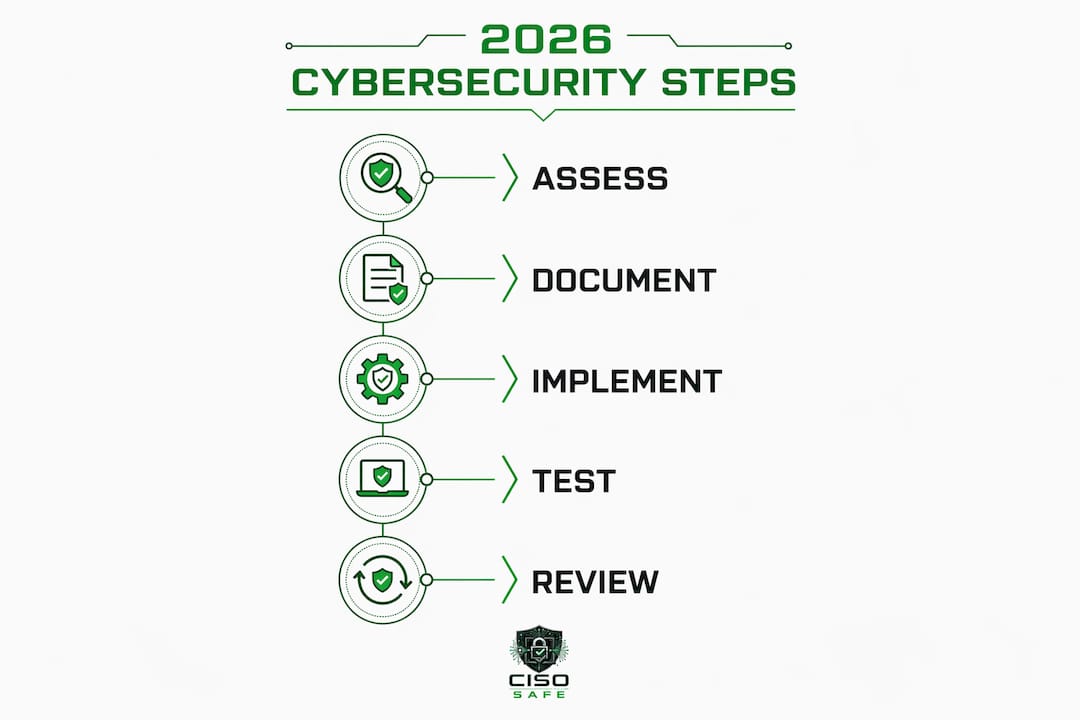
Assess your regulatory baseline first. Identify which frameworks are mandatory for your license type and jurisdiction. NERC CIP applies to bulk electric system operators in North America. UK licensed operators now face mandatory baseline requirements. Start with compliance obligations, then layer in voluntary frameworks like NIST CSF for broader coverage.
-
Conduct a gap analysis against your chosen framework. Map your current controls to the framework's requirements. Identify what you have, what is missing, and what is partially implemented. This analysis becomes your risk roadmap and your budget justification.
-
Assign framework ownership at the executive level. A framework without an owner becomes a document that no one updates. Assign a senior leader, or engage a virtual CISO, to own framework implementation, track progress, and report to the board quarterly.
-
Integrate the framework into procurement and vendor management. Every new technology purchase and every third-party contract should reference your framework's control requirements. This prevents tool sprawl and ensures supply chain risks are addressed before they become incidents.
-
Test and update annually. Frameworks are not static. NERC CIP-003-11 is proof that regulatory requirements evolve. Schedule annual reviews of your framework implementation against updated standards and your organization's changing risk profile.
The most common pitfall is treating framework adoption as a one-time compliance exercise. Energy executives who embed framework reviews into their annual governance calendar, alongside financial audits and board reporting, build security programs that stay current as threats and regulations evolve. The energy sector compliance frameworks overview provides a practical starting point for mapping your obligations to specific framework controls.
Key Takeaways
Energy companies that implement recognized cybersecurity frameworks gain regulatory compliance, cross-functional alignment, and measurable operational resilience that no individual security tool can deliver alone.
| Point | Details |
|---|---|
| Frameworks are now mandatory | NERC CIP-003-11 and UK regulations make documented cyber frameworks a legal requirement for licensed energy operators. |
| OT and IT convergence creates new risk | Connecting industrial control systems to IT networks expands the attack surface frameworks are specifically designed to address. |
| Cross-team alignment reduces liability | Frameworks give IT, legal, and compliance teams a shared language that improves audit readiness and incident response. |
| Tool sprawl is a framework failure | Buying security products without a framework produces gaps; a gap analysis prevents redundant and misaligned investments. |
| Framework ownership must be executive-level | Assigning a senior leader or virtual CISO to own framework implementation keeps programs current and board-reportable. |
What I have learned about frameworks after years in energy security
The most persistent mistake I see energy executives make is treating a cybersecurity framework as a compliance checkbox. They commission a gap analysis, produce a report, and file it. Twelve months later, nothing has changed operationally, and the next audit finds the same gaps.
Frameworks only work when they are embedded in how decisions get made, not just how they get documented. The organizations that get real value from NIST CSF or NERC CIP are the ones where the framework language shows up in procurement conversations, vendor contracts, and board risk reports. That requires executive sponsorship, not just IT effort.
The regulatory shift in 2026 is actually good news for executives who have been waiting for a business case. Mandatory requirements remove the internal debate about whether to invest. The question is no longer "should we implement a framework?" It is "how do we implement one that actually works?" The answer starts with assigning ownership at the right level and treating the framework as a governance tool, not a security department project.
The future trajectory is clear. As energy networks become more distributed and digitalized, the attack surface grows. Regulators will continue to raise the baseline. Executives who build framework-driven programs now will adapt to those changes incrementally. Those who wait will face larger gaps and higher remediation costs under tighter regulatory timelines.
— vCISO
How CisoSafe helps energy companies build framework-driven security programs
Energy executives who need to implement or strengthen a cybersecurity framework often face the same constraint: they lack a dedicated security leader with both the technical depth and the regulatory knowledge to do it right.
CisoSafe provides virtual CISO services built specifically for regulated industries, including oil and gas operators, energy retailers, and utility companies. The CisoSafe team delivers security assessments, risk roadmaps, policy development, and framework implementation support aligned to NIST CSF, NERC CIP, and other applicable standards. The AI-powered compliance platform automates reporting and audit preparation, giving your leadership team clear visibility into risk without requiring a full-time internal security hire. For energy firms that need enterprise-grade security expertise at a cost that fits mid-market budgets, CisoSafe is the practical path from framework gap to framework compliance.
FAQ
What is a cybersecurity framework in the energy sector?
A cybersecurity framework is a structured set of policies, controls, and risk management practices that guides energy companies in protecting IT and OT systems. Common frameworks include NIST CSF, ISO 27001, and NERC CIP, each tailored to different regulatory and operational contexts.
Is NERC CIP mandatory for all energy companies?
NERC CIP applies specifically to bulk electric system operators in North America. The NERC CIP-003-11 update approved in march 2026 expanded requirements to include low-impact cyber systems, bringing more assets under enforceable standards.
How do cyber frameworks reduce operational risk?
Frameworks require documented controls for access management, threat detection, incident response, and vendor risk. These controls reduce the likelihood of a breach and shorten recovery time when incidents do occur.
What happens if an energy company operates without a framework?
Energy firms without a framework typically accumulate redundant security tools, inconsistent controls, and undocumented processes. This creates audit failures, regulatory penalties, and longer recovery times after incidents.
How long does it take to implement a cybersecurity framework?
Implementation timelines vary by organization size and existing security maturity. A gap analysis typically takes four to eight weeks. Full framework implementation, including policy development and control testing, generally requires six to twelve months for mid-market energy operators.